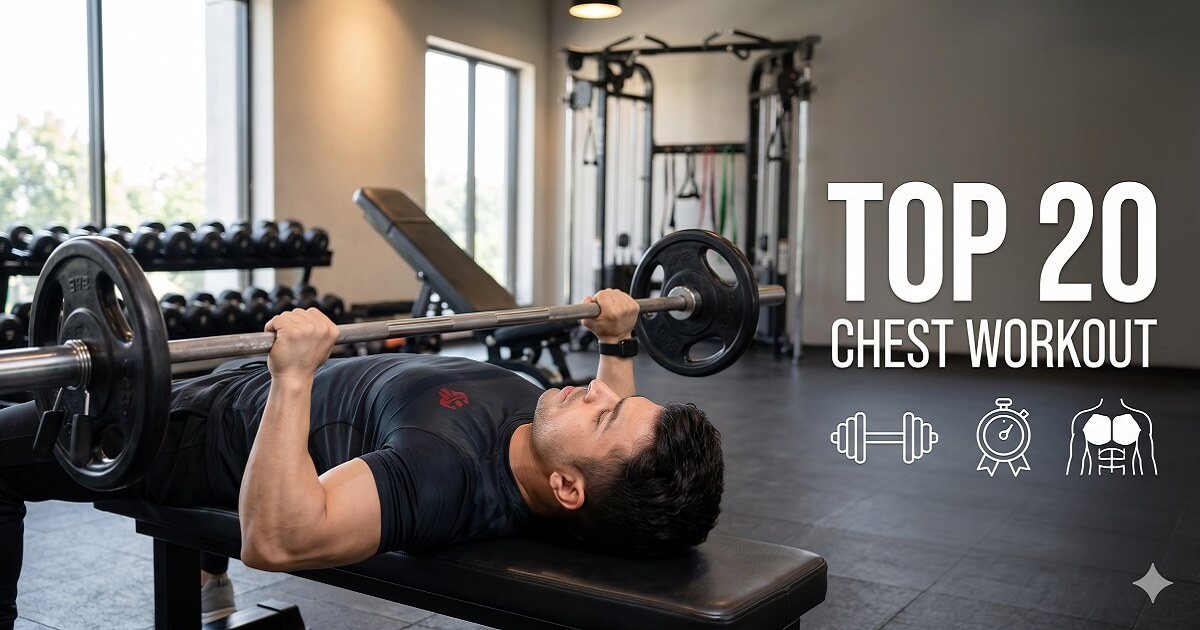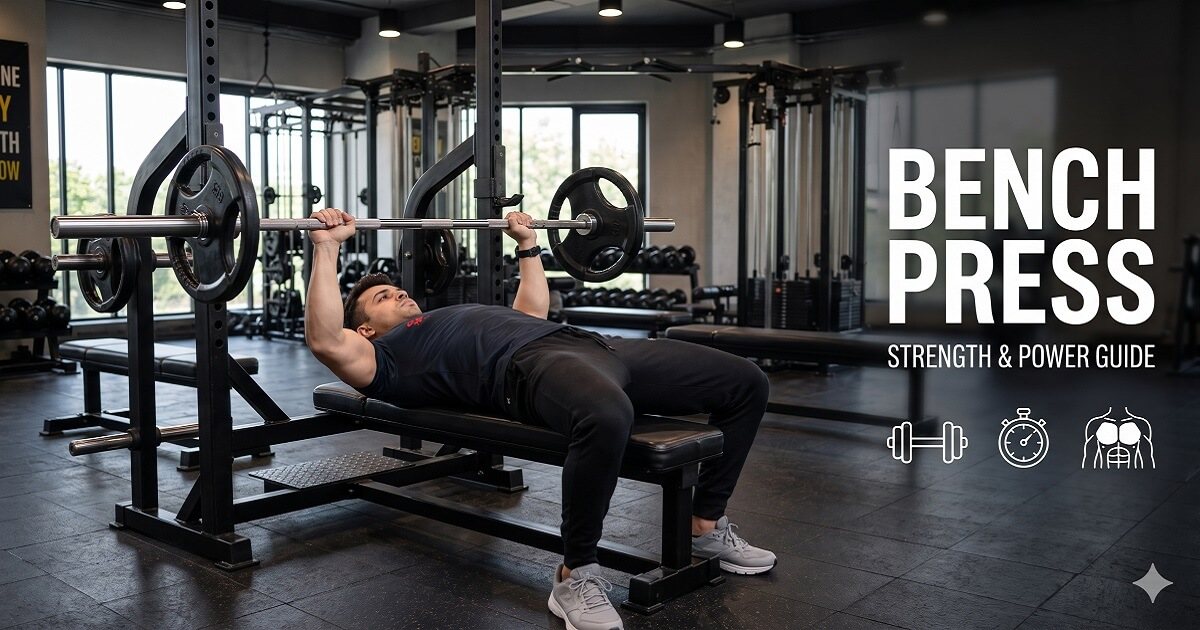
The bench press exercise is one of the most effective compound movements in strength training. Performed by lying on a flat bench and pressing a weighted barbell upward from the chest, it recruits multiple upper-body muscle groups simultaneously. Whether your goal is building chest size, increasing maximal pushing strength, or improving athletic power, mastering proper bench press technique allows you to lift safely and progress consistently over time.
[Internal Link Suggestion: Link to your Upper-Body Strength Training Routine or Beginner Gym Workout Guide]
What Muscles Does the Bench Press Exercise Work?
Because the bench press involves movement at both the shoulder and elbow joints, it functions as a multi-joint compound lift. Understanding which muscles contribute to each phase of the movement helps you maintain better tension and control throughout every repetition.
- Pectoralis Major (Chest): The primary mover responsible for bringing the upper arms across the body and driving the barbell upward from the chest.
- Anterior Deltoids (Front Shoulders): Assist heavily during the bottom and middle portions of the press as the upper arms flex forward.
- Triceps Brachii (Back of the Arms): Take over increasingly during the upper half of the lift to extend the elbows and lock out the weight.
- Upper Back and Stabilizers: The rhomboids, trapezius, latissimus dorsi, and rotator cuff muscles stabilize the shoulder blades against the bench to create a solid pressing platform.
- Core and Lower Body: Engaging your abdominals and pressing your feet into the floor prevents unwanted shifting and transfers force efficiently through your torso.
How to Perform the Bench Press Exercise with Proper Form
Consistent technique protects your shoulders and wrists while maximizing force output. Follow these four steps on every set.
1. Set Your Base on the Bench
Lie flat on the bench so your eyes are positioned directly underneath the barbell. Plant both feet firmly on the floor, slightly behind your knees if comfortable, so your legs can maintain steady tension. Pull your shoulder blades together and downward into the bench pad. This creates a stable upper-back shelf and produces a slight, natural arch in your lower back while keeping your glutes in full contact with the bench.
2. Grip and Unrack the Barbell
Grasp the barbell slightly wider than shoulder-width apart—typically where your forearms remain vertical when the bar reaches your chest. Wrap your thumbs fully around the bar rather than using a thumbless grip, and keep your wrists straight and stacked over your forearms. Take a deep breath, tighten your upper back, and press the bar out of the rack until it sits directly over your mid-chest with locked elbows.
3. Lower the Bar with Control
Inhale deeply into your torso and lower the barbell smoothly toward your mid-chest (around nipple level). As the bar descends, keep your elbows tucked at roughly a 45-degree angle relative to your torso rather than flaring them straight out to the sides. Maintain tight control throughout the descent so the bar lands on the exact same spot on your chest every repetition.
4. Press Upward and Lock Out
Allow the barbell to touch your mid-chest lightly without bouncing it off your ribcage. Exhale forcefully and drive the bar upward and slightly back toward the rack until your elbows are fully extended over your shoulders. Keep your hips on the bench and your shoulder blades pinned back throughout the entire press.
Sets, Reps, and Rest Guidelines by Fitness Goal
Adjusting your training volume, weight selection, and rest periods allows you to tailor the bench press exercise to your specific objective.
| Training Goal | Sets × Reps | Load Guidance | Rest Between Sets |
|---|---|---|---|
| Beginners (Form Mastery) | 3 sets × 8–12 reps | Light to moderate weight with smooth, controlled tempo | 60–90 seconds |
| Muscle Growth (Hypertrophy) | 3–4 sets × 8–12 reps | Moderate to heavy weight; final 2 reps feel challenging | 60–90 seconds |
| Maximal Strength | 4–5 sets × 3–6 reps | Heavy load requiring full focus and strict bar path | 2–3 minutes |
| Muscular Endurance | 2–3 sets × 12–15+ reps | Lighter load focused on steady pacing and form | 45–60 seconds |
Key Benefits of the Bench Press Exercise
- Builds Upper-Body Muscle Mass: High mechanical tension across the chest, shoulders, and triceps stimulates noticeable hypertrophy when paired with progressive overload.
- Develops Raw Pushing Strength: Few upper-body movements allow you to load and progress horizontal pushing power as reliably as a barbell bench press.
- Enhances Athletic Carryover: Explosive pressing strength transfers directly to sports requiring upper-body force, such as combat sports, football, swimming, and throwing events.
- Offers Easy Progress Tracking: Using a standard barbell and weight plates makes it straightforward to add small increments of weight over time.
- Supports Bone and Connective Tissue Strength: Consistent resistance training places healthy stress on upper-body bones, tendons, and ligaments.
Popular Bench Press Variations
Once you master the flat barbell version, incorporating variations can address weak points, improve joint comfort, or shift emphasis across different muscle fibers.
Incline Bench Press
Performed on a bench angled between 30 and 45 degrees, the incline bench press places greater emphasis on the upper chest (clavicular head of the pectoralis major) and front deltoids.
Dumbbell Bench Press
Using dumbbells instead of a barbell allows each arm to move independently, helping correct strength imbalances between sides and offering a slightly deeper stretch at the bottom of the movement.
Close-Grip Bench Press
Bringing your hands in to roughly shoulder-width apart shifts mechanical demand onto the triceps and inner chest while reducing strain on the outer shoulder joint.
[Internal Link Suggestion: Link to your Dumbbell Chest Workout or Triceps Strengthening Exercises article]
Common Bench Press Mistakes and How to Fix Them
- Flaring Elbows Out at 90 Degrees: Letting your elbows point straight out toward the walls increases stress on the shoulder joint. Fix this by rotating your elbows slightly inward to roughly a 45-degree angle as you lower the bar.
- Bouncing the Bar Off the Chest: Dropping the bar rapidly and rebounding it off your sternum removes muscle tension and risks injury. Lower the weight under control and pause briefly on your chest before pressing.
- Lifting Your Hips Off the Bench: Raising your glutes to heave heavy weight compromises lower-back stability. Keep your glutes pressed firmly into the pad from start to finish.
- Bending Your Wrists Backward: Allowing the bar to roll back toward your fingers strains the wrist joints. Position the bar deep in the palm directly over the forearm bones and keep your knuckles pointing toward the ceiling.
Essential Safety Tips for Bench Pressing
Because the barbell travels directly over your chest and neck, prioritizing gym safety is non-negotiable—especially as weights get heavier.
- Use a Spotter or Safety Pins: Always train with a reliable spotter or set the power rack's safety arms just below chest height so you can safely exit a failed rep.
- Warm Up Progressively: Start with dynamic shoulder mobility drills and 2 to 3 lighter warm-up sets before loading your working weight.
- Secure Weight Plates with Collars: Always use barbell collars when lifting with a spotter or in a rack so plates cannot slide off if the bar tilts slightly.
Frequently asked questions
What is the bench press exercise best for?
The bench press exercise is best for building upper-body pushing strength and increasing muscle mass in the chest, front shoulders, and triceps. Because it allows you to lift heavier loads than most isolation exercises, it serves as a primary strength builder in upper-body and full-body workout programs.
How wide should my grip be during the bench press exercise?
Your grip should generally be slightly wider than shoulder-width apart. A helpful rule of thumb is to choose a hand spacing where your forearms are vertical and perpendicular to the floor when the barbell touches your mid-chest.
Should my lower back be completely flat on the bench during the bench press exercise?
No, a slight, natural arch in your lower back is normal and helpful. Pulling your shoulder blades together and down into the bench naturally creates a modest arch that stabilizes your shoulders and puts your chest in a stronger mechanical position, provided your glutes and upper back remain firmly on the bench.
How often should I do the bench press exercise each week?
Most lifters see strong results performing the bench press exercise 1 to 2 times per week, allowing at least 48 to 72 hours of recovery between heavy chest-pressing sessions so muscles and joints can fully repair.
Is the barbell or dumbbell bench press exercise better for beginners?
Both variations are valuable for beginners. The barbell bench press makes it easier to stabilize the weight path and add small load increments, while the dumbbell bench press helps build independent arm coordination and often feels gentler on sensitive shoulder joints.