Quick answer: The best change-of-direction work starts with braking and stability.
Change-of-direction speed is the ability to decelerate, reposition and accelerate along a planned path. Agility also includes perceiving and reacting to unpredictable information. Both involve force absorption, foot placement and coordination, but a good time on a known cone course is not proof of elite game agility.
The main idea and its practical implications: change-of-direction speed and braking control
Three-step decelerations, short shuttles and controlled lateral plants can be progressed before sharp cuts A drill should have a reason: train a planned change, a stopping skill or a reaction, rather than calling every cone arrangement agility.
Begin with planned changes at moderate speed. Use clear floor markings and grippy footwear, approach the cut by shortening the final steps and controlling hips and knees, then accelerate away. Add speed only after braking is repeatable; never practice hard cuts where space or traction is uncertain.
How to judge the available options
The best change-of-direction work starts with braking and stability. Three-step decelerations, short shuttles and controlled lateral plants can be progressed before sharp cuts. A drill should have a reason: train a planned change, a stopping skill or a reaction, rather than calling every cone arrangement agility.
Movement and method options worth knowing
| Option | How to use it | Purpose |
|---|---|---|
| Three-step brake | Jog forward and reduce speed over three controlled steps. | Teaches gradual deceleration. |
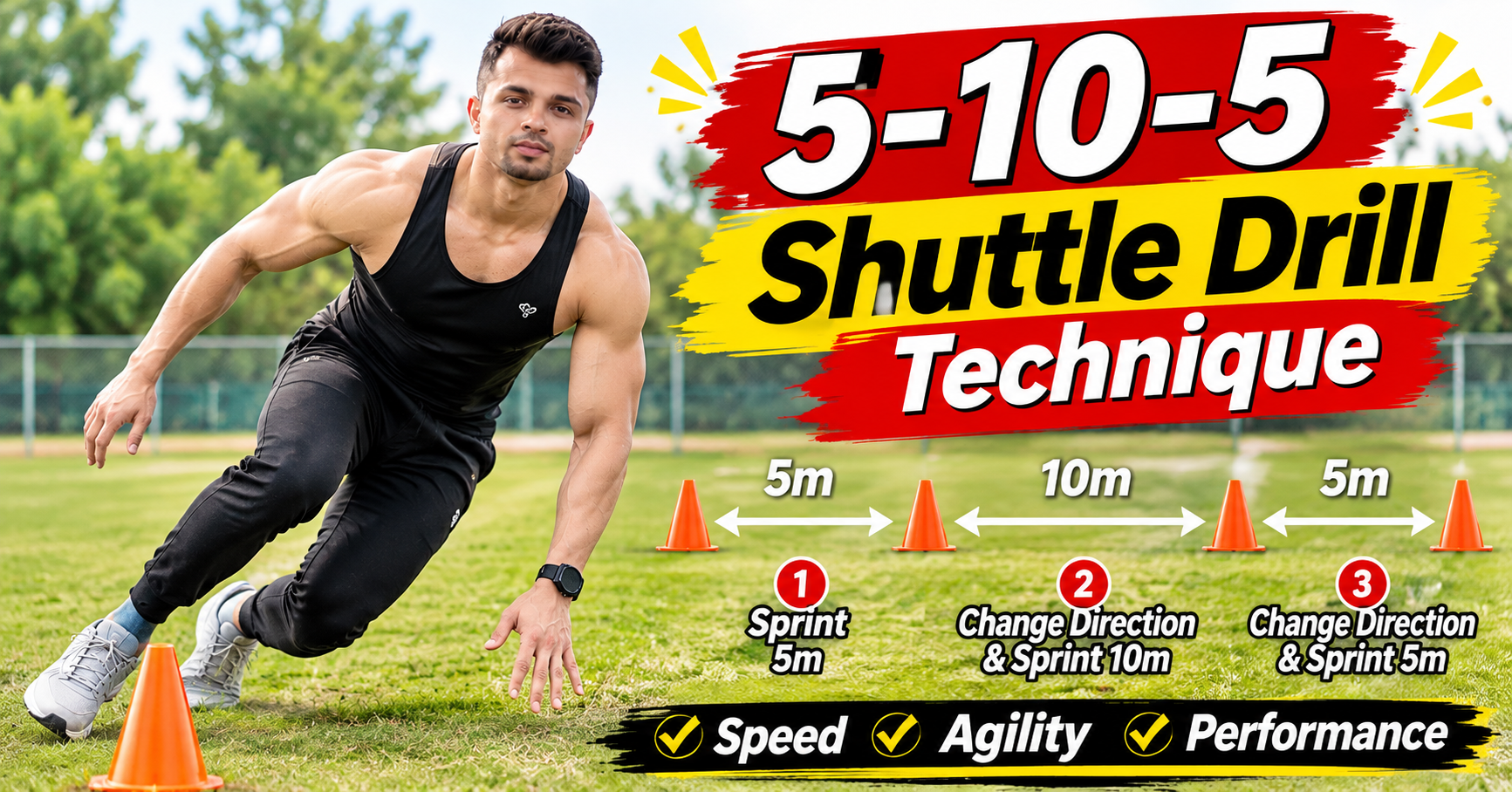
| 5-10-5 shuttle | Sprint five yards, reverse to ten yards across and return to center as defined by the protocol. | Tests repeatable planned lateral change. |
| Side-step and stick | Move laterally and hold the landing position briefly. | Practices alignment and balance. |
| Reactive mirror drill | Follow a partner's unpredictable lateral cues at low speed. | Adds real decision making. |
| Square-cone drill | Move between four marked corners with controlled turns. | Builds multi-direction movement familiarity. |
Six steps for making the plan workable
- Identify the task: Choose a practical reason to work on change-of-direction speed and braking control: comfort, skill, sport readiness, or a repeatable assessment. Specify what will improve and what should remain comfortable.
- Record your starting point: Try the easiest suitable variation briefly before the main work. Use a fixed course, same turning foot convention and consistent timing, plus notes on controlled braking. Video may reveal overstriding near the turn. This initial check helps prevent using an outdated maximum as a warm-up.
- Choose the main task: Begin with three-step brake when it suits the purpose. Jog forward and reduce speed over three controlled steps. The task is selected for its training role, not to make a session seem more advanced.
- Add a supporting component: A complementary choice is side-step and stick. Practices alignment and balance. Keep the workload modest while learning whether the combination is useful.
- Make difficulty measurable: Use a fixed course, same turning foot convention and consistent timing, plus notes on controlled braking. Video may reveal overstriding near the turn. Changing the standard during a workout can produce misleading comparisons.
- Review and adjust: Increase approach speed gradually, then add more complex directions or reactive cues once control is consistent. Compare like-for-like efforts and note whether the exercise is more useful in everyday tasks or sport.
A realistic training example
Agility requires responding to information while change-of-direction speed can be tested with an announced path. A player might move quickly through cones yet react slowly to an opponent. Train both if sport demands it, keeping the decision task small enough that form does not collapse.
One-session decision table
| Check | If it is working | If it is not |
|---|---|---|
| Preparation | The starting movement feels familiar and controlled. | Use an easier preparation set, shorter duration, or a demonstration. |
| Main effort | The planned work is challenging but repeatable. | Reduce weight, duration, speed, or set count before technique slips. |
| Recovery | The next planned session remains manageable. | Move the session, lower fatigue, or repeat the previous workload. |
| Tracking | The metric and movement standard match last time. | Document the change and establish a new comparison baseline. |
A practical session you can adapt
For best change-of-direction drills, try three-step brake as a first practice option. Jog forward and reduce speed over three controlled steps. The purpose is clear: teaches gradual deceleration. Keep the session manageable and observe technique. If this is unsuitable, another choice is 5-10-5 shuttle. Sprint five yards, reverse to ten yards across and return to center as defined by the protocol. Note that different exercises are not equivalent measurements of progress.
Compare today with a similar session. Use a fixed course, same turning foot convention and consistent timing, plus notes on controlled braking. Video may reveal overstriding near the turn. If a movement is uncomfortable, simplify it. Repeating a well-controlled setup provides better information than adding intensity merely to make the session feel difficult.
When and how to progress
Increase approach speed gradually, then add more complex directions or reactive cues once control is consistent.
Common errors that interfere with progress
- Confusing a rehearsed cone run with reactive agility: Train decisions separately when ready. Ask whether the error alters the intended movement or only the appearance of difficulty.
- Cutting sharply without braking preparation: Teach deceleration at moderate speed first. Check whether the setup, resistance, or session order makes the problem more likely.
- Using slippery indoor or outdoor surfaces: Check grip and stop if traction is unreliable. Try one correction and repeat the task before adding another cue.
- Adding excessive turns until technique fails: Prioritize a few high-quality efforts. Record the adjustment so the next session remains comparable.
- Comparing shuttle times from different protocols: Standardize distances, touches and timing. If the problem persists despite a simpler variation, seek informed coaching.
How to adapt the approach to your ability
Cone drills can use an L-shape, square or short shuttle, but adding more cones does not automatically make a better session. Match spacing and directions to the sport, coach the braking step and allow rest. A small number of clean repetitions produces better information than a chaotic obstacle course.
The progress measures that matter here
Use a fixed course, same turning foot convention and consistent timing, plus notes on controlled braking. Video may reveal overstriding near the turn.
What the research supports
World Rugby and NSCA coaching resources emphasize specificity, progression, warm-up, recovery and landing or deceleration control in athletic conditioning. They provide transferable training principles, not basketball-specific or football-specific guarantees. Team workload, athlete background and surface safety must inform programming.
Recent ligament injury, instability or joint pain require sport-specific return-to-play guidance before high-speed cutting.
This guide is educational rather than a diagnosis. Stop an activity that causes sharp pain, fainting, chest pressure or other concerning symptoms and seek appropriate medical support. Individual health conditions or recent injury may require a tailored plan.
Taking the next step
To continue learning without repeating the same topic, compare 5-10-5 Shuttle Drill Technique with How to Improve Deceleration for Cutting. The linked topics answer adjacent questions and help you decide which training detail to work on next.
Research and further reading
Frequently asked questions
Which option should I try first for Best Change-of-Direction Drills?
The best change-of-direction work starts with braking and stability. Recent ligament injury, instability or joint pain require sport-specific return-to-play guidance before high-speed cutting.