The dumbbell chest fly stands out as one of the most effective isolation exercises for building a fuller, more defined chest. While compound presses like the bench press build overall strength, the dumbbell chest fly targets the pectoral muscles through a deep stretch and controlled squeeze that many pressing movements cannot match. Whether you train at home with a pair of dumbbells or in a commercial gym, mastering this movement can accelerate chest development when performed with proper technique.
This guide covers everything you need to know about the dumbbell chest fly. You will learn the muscles it works, the real benefits backed by training principles, exact step-by-step instructions for perfect form, common mistakes that limit results or cause injury, useful variations including the incline dumbbell chest fly, and how to program it into your dumbbell chest fly workout for maximum growth.
Contents Overview
- What Is the Dumbbell Chest Fly?
- Muscles Worked by the Dumbbell Chest Fly
- Key Benefits of the Dumbbell Chest Fly
- Step-by-Step Guide to Proper Dumbbell Chest Fly Form
- Common Mistakes and How to Fix Them
- Effective Dumbbell Chest Fly Variations
- How to Add the Dumbbell Chest Fly to Your Chest Workouts
- Dumbbell Chest Fly vs Other Popular Chest Exercises
- Safety Tips and Injury Prevention
- Conclusion
- Frequently Asked Questions About the Dumbbell Chest Fly
What Is the Dumbbell Chest Fly?
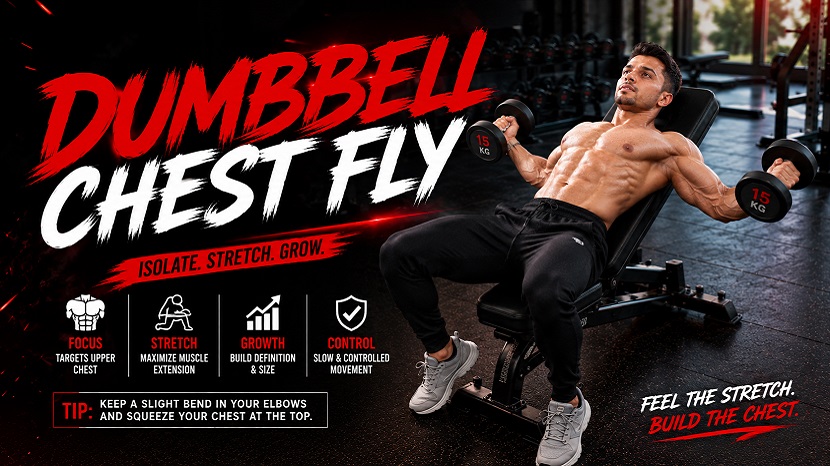
The dumbbell chest fly is an isolation exercise performed while lying on a flat or inclined bench. You hold a dumbbell in each hand above your chest and lower them outward in a wide arc before bringing them back together. The movement mimics hugging a large tree or opening and closing your arms like wings.
Unlike pressing exercises that involve the shoulders and triceps heavily, the chest fly with dumbbells places almost all the tension on the pectoral muscles. The deep stretch at the bottom position and the strong contraction at the top make it especially valuable for muscle growth and mind-muscle connection.
Muscles Worked by the Dumbbell Chest Fly
Understanding dumbbell chest fly muscles worked helps you appreciate why this exercise deserves a place in your routine.
- Pectoralis Major — This is the primary target. The sternal (lower) head receives excellent stimulation on a flat bench, while the clavicular (upper) head gets more emphasis on an incline.
- Anterior Deltoids — The front shoulders assist in the movement and stabilize the arms.
- Biceps Brachii — These muscles work isometrically to keep a slight bend in the elbows throughout the set.
- Serratus Anterior and Core — These stabilizers keep your shoulder blades in position and maintain a stable torso.
Because the exercise uses lighter loads than presses, you can focus purely on chest contraction without the triceps or shoulders limiting the set.
Key Benefits of the Dumbbell Chest Fly
The dumbbell chest fly benefits go far beyond simple isolation. Here is why smart lifters include it regularly.
- Superior Stretch for Hypertrophy — Research on stretch-mediated hypertrophy shows that training muscles at long lengths can trigger greater growth. The dumbbell chest fly places the pecs under tension in a deep stretched position that bench presses rarely achieve.
- Improved Mind-Muscle Connection — The slow, controlled arc makes it easier to feel the chest working. Many people struggle to “feel” their chest during presses; flies solve this problem quickly.
- Joint-Friendly Volume — After heavy pressing, your triceps and front delts often fatigue first. Flies allow you to add high-quality chest volume without further taxing those muscles.
- Better Chest Shape and Definition — The adduction movement (bringing arms across the body) helps develop the inner and outer portions of the pecs, contributing to a fuller, more three-dimensional chest appearance.
- Versatility and Accessibility — You only need a bench and a pair of dumbbells. This makes the exercise practical for home workouts and travel.
When combined with pressing movements, the dumbbell chest fly creates balanced chest development that pure pressing programs often miss.
Step-by-Step Guide to Proper Dumbbell Chest Fly Form
Learning proper form for dumbbell chest fly is essential. Poor technique turns this great exercise into a shoulder or biceps injury risk. Follow these steps carefully.
Step 1: Set up safely. Sit on the edge of a flat bench with a dumbbell resting on each thigh. Lean back while using your thighs to help lift the weights to chest level. Once lying flat, press the dumbbells straight up above your chest with a slight bend in the elbows and palms facing each other.
Step 2: Establish the starting position. Keep your shoulder blades pulled down and back against the bench. Your feet should stay flat on the floor with a slight arch in the lower back. Maintain a 10- to 20-degree bend in the elbows throughout the entire movement.
Step 3: Lower with control. Inhale deeply and slowly lower the dumbbells outward in a wide arc. Imagine you are opening your arms to hug a large barrel. Keep the same elbow angle the entire time. Lower until you feel a strong stretch across your chest, usually when your upper arms are roughly parallel to the floor or slightly below.
Step 4: Squeeze and return. Exhale and reverse the motion by squeezing your chest hard. Bring the dumbbells back up in the same wide arc until they are about 6 to 12 inches apart above your chest. Avoid clashing the weights together at the top.
Step 5: Repeat with intention. Perform each repetition slowly, especially on the lowering phase. A 2- to 3-second eccentric (lowering) tempo works well for most people. Keep your head, shoulders, and hips in contact with the bench at all times.
Helpful Tip: Use lighter weights than you think you need. The goal is tension and stretch on the chest, not heavy loading. If your shoulders feel pinched or uncomfortable, reduce the range of motion or switch to the floor variation described later.
Common Mistakes and How to Fix Them
Even experienced lifters make these errors with the dumbbell chest fly. Correcting them will improve results and protect your joints.
- Using too much weight. This forces the elbows to straighten or the shoulders to take over. Fix: Drop the weight by 20-30 percent and focus on feeling the chest stretch and contract.
- Straightening the arms completely. Locking the elbows shifts stress to the shoulder joint and biceps tendon. Fix: Maintain a soft 10- to 20-degree bend at all times.
- Going too deep into the stretch. Excessive range can strain the shoulder capsule, especially if you lack mobility. Fix: Stop at the first strong stretch sensation. Never force the dumbbells toward the floor.
- Clashing the dumbbells at the top. This reduces tension on the chest at the point where it should be working hardest. Fix: Stop 6-12 inches apart and squeeze the pecs instead.
- Lifting the butt or feet off the bench. This creates momentum and reduces stability. Fix: Plant your feet firmly and keep your glutes in contact with the bench throughout the set.
- Rushing the movement. Fast reps reduce time under tension and mind-muscle connection. Fix: Use a controlled 2- to 3-second lowering phase and a deliberate squeeze on the way up.
Effective Dumbbell Chest Fly Variations
Once you master the basic movement, these dumbbell chest fly variations add variety and target different areas of the chest.
1. Incline Dumbbell Chest Fly
Set the bench to a 15- to 30-degree incline. This incline dumbbell chest fly emphasizes the upper (clavicular) portion of the pectoralis major. The angle increases the stretch on the upper chest while still protecting the shoulders when performed with control. Use slightly lighter weights than the flat version.
2. Floor Dumbbell Chest Fly
Lie on the floor instead of a bench. The limited range of motion stops you from lowering the dumbbells too far, making this variation excellent for beginners, people recovering from shoulder issues, or anyone who wants a safer option. Your upper arms touch the floor at the bottom, naturally protecting the joints.
3. Single-Arm Dumbbell Chest Fly
Perform the movement one arm at a time while the non-working arm rests on your chest or extends for balance. This variation corrects strength imbalances between sides and increases core demand to prevent twisting. It is especially useful if one side of your chest lags behind the other.
4. Decline Dumbbell Chest Fly
A slight decline (10-20 degrees) can shift emphasis toward the lower chest and sometimes feels more comfortable for people with shoulder irritation. Use a decline bench or place a small wedge under a flat bench. Keep the movement controlled and avoid very steep angles that cause sliding.
5. Stability Ball Dumbbell Chest Fly
Perform the fly while lying on a stability ball. This adds core and glute activation because you must stabilize your body. It is a great option for home workouts or when you want to train the chest while improving overall stability. Use lighter dumbbells and focus on keeping the hips high and the torso steady.
How to Add the Dumbbell Chest Fly to Your Chest Workouts
The dumbbell chest fly works best as an accessory movement after your main pressing exercises. Here is a simple structure that delivers excellent results.
- Perform 3 to 4 sets of 8 to 15 repetitions.
- Rest 60 to 90 seconds between sets.
- Use it on chest days or upper-body push workouts, typically after flat or incline pressing.
- Progress by adding small weight increments or extra controlled repetitions over time while maintaining perfect form.
Sample Chest Workout Structure
| Exercise | Sets | Reps | Rest | Notes |
|---|---|---|---|---|
| Dumbbell Bench Press | 4 | 6-10 | 2 min | Primary strength builder |
| Incline Dumbbell Press | 3 | 8-12 | 90 sec | Upper chest focus |
| Dumbbell Chest Fly | 3-4 | 10-15 | 60-90 sec | Isolation and stretch |
| Push-Ups or Dips | 2-3 | AMRAP | 60 sec | Finisher for endurance |
Dumbbell Chest Fly vs Other Popular Chest Exercises
Many people wonder how the dumbbell fly vs bench press compares. The bench press is a compound movement that builds overall pressing strength and involves the chest, shoulders, and triceps. The dumbbell chest fly is an isolation exercise that provides a deeper stretch and better chest-specific tension in certain ranges.
Cable flies or pec deck machines offer constant tension throughout the entire range of motion, which some research suggests may be superior for hypertrophy. However, the dumbbell chest fly excels at the stretched position and requires less equipment. The best approach for most people is to use both pressing movements and fly variations in the same program.
Safety Tips and Injury Prevention
Shoulder health should always come first. Warm up your shoulders and chest with light sets or arm circles before heavy work. Never sacrifice form for heavier weight. If you feel sharp pain (as opposed to normal muscle stretch), stop immediately and reduce the range of motion or try the floor variation. People with existing shoulder injuries should consult a qualified trainer or physical therapist before adding flies.
Keep your shoulder blades retracted and depressed throughout the set. This stable position protects the shoulder joint and allows the chest to do the work it is supposed to do.
Conclusion
The dumbbell chest fly is a powerful tool for anyone serious about chest development. When you combine proper form, appropriate weight selection, and smart programming, this exercise delivers the stretch and isolation that help create a thicker, more aesthetic chest.
Start by mastering the basic flat version with controlled tempo and a strong mind-muscle connection. Then experiment with the incline dumbbell chest fly and floor variation to find what works best for your body. Pair it with solid pressing movements, progressive overload, and adequate recovery, and you will see noticeable improvements in both strength and appearance.
Consistency beats perfection. Focus on quality repetitions, listen to your body, and the results will follow. Add the dumbbell chest fly to your next chest session and experience the difference a well-executed isolation movement can make.
Frequently Asked Questions (FAQs)
1. What is the dumbbell chest fly exercise?
Answer: The dumbbell chest fly is an isolation exercise performed while lying on a bench. You hold a dumbbell in each hand above your chest and lower the weights outward in a wide arc before bringing them back together. This movement creates a deep stretch and strong contraction in the chest muscles, making it highly effective for building a fuller and more defined chest when combined with pressing exercises.
2. How do you perform the dumbbell chest fly with proper form?
Answer: Lie flat on a bench with your feet planted firmly on the floor and a slight arch in your lower back. Hold dumbbells above your chest with a small bend in your elbows and palms facing each other. Slowly lower the weights outward in a wide arc until you feel a stretch across your chest, keeping the same elbow angle throughout. Reverse the motion by squeezing your chest to bring the dumbbells back up, stopping about 6 to 12 inches apart at the top. Maintain control with a 2 to 3 second lowering phase and keep your shoulder blades pulled down and back against the bench.
3. What muscles does the dumbbell chest fly primarily work?
Answer: The dumbbell chest fly primarily targets the pectoralis major, which is the large muscle of the chest. It also involves the anterior deltoids at the front of the shoulders as secondary muscles. The biceps act as stabilizers to maintain the slight bend in the elbows, while the serratus anterior and core muscles help keep your torso stable during the movement.
4. What are the main benefits of including dumbbell chest fly in a workout?
Answer: The dumbbell chest fly offers several important benefits. It provides a deep stretch on the chest muscles that can support greater muscle growth through stretch-mediated hypertrophy. It improves mind-muscle connection, allowing you to feel the chest working more effectively. The exercise adds high-quality chest volume after pressing movements without overtaxing the shoulders and triceps. It also helps develop better chest shape, definition, and overall balance when included regularly in a training program.
5. How many sets and reps should I do for the dumbbell chest fly?
Answer: Most people achieve excellent results with 3 to 4 sets of 8 to 15 repetitions. Choose a weight that allows you to maintain perfect form and a controlled tempo throughout every rep. Perform the exercise after your main pressing movements on chest day or upper body push workouts. Rest 60 to 90 seconds between sets. Focus on quality and the stretch-squeeze feeling rather than lifting the heaviest possible weight.
6. What are the most common mistakes people make with dumbbell chest fly?
Answer: Common mistakes include using too much weight, which causes the elbows to straighten and shifts tension away from the chest. Other errors are lowering the dumbbells too far and causing shoulder discomfort, clashing the weights together at the top which reduces chest tension, lifting the hips or feet off the bench, and rushing through the movement instead of using a slow and controlled tempo. Always prioritize proper form and a pain-free range of motion over heavier loads.
7. How does the dumbbell chest fly compare to the bench press?
Answer: The bench press is a compound exercise that builds overall pressing strength and works the chest, shoulders, and triceps together. The dumbbell chest fly is an isolation movement that provides a longer range of motion and deeper stretch specifically on the chest muscles. Both exercises are valuable in a complete program. Presses develop strength and power while flies add targeted volume and improve chest development. The most effective approach combines both movements in your training routine.
8. What are the best variations of the dumbbell chest fly?
Answer: Effective variations include the incline dumbbell chest fly, which emphasizes the upper chest, and the floor dumbbell chest fly, which limits range of motion and is often safer for the shoulders. Other useful options are the single-arm version for correcting strength imbalances and the stability ball version for added core engagement. A slight decline version can target the lower chest. Choose variations based on your goals, equipment availability, and any shoulder considerations.
9. Is the dumbbell chest fly safe if I have shoulder pain or previous injuries?
Answer: If you have shoulder pain or a history of shoulder injuries, consult a doctor or physical therapist before performing the exercise. Many people with mild issues find the floor dumbbell chest fly safer because the floor naturally limits how far you can lower the weights. Always stop immediately if you feel sharp pain. Keep your shoulder blades stable against the bench and use a pain-free range of motion. Never force a deep stretch if it causes discomfort.
10. How can I improve my mind-muscle connection during the dumbbell chest fly?
Answer: To improve mind-muscle connection, start with lighter weights and focus on feeling the stretch in your chest during the lowering phase and the squeeze during the lifting phase. Perform the movement slowly and visualize hugging a large tree or squeezing your chest muscles together. Some lifters practice a standing version first while placing one hand on their chest to feel the muscle working. Consistent practice with controlled form and focused attention helps develop this connection over time.