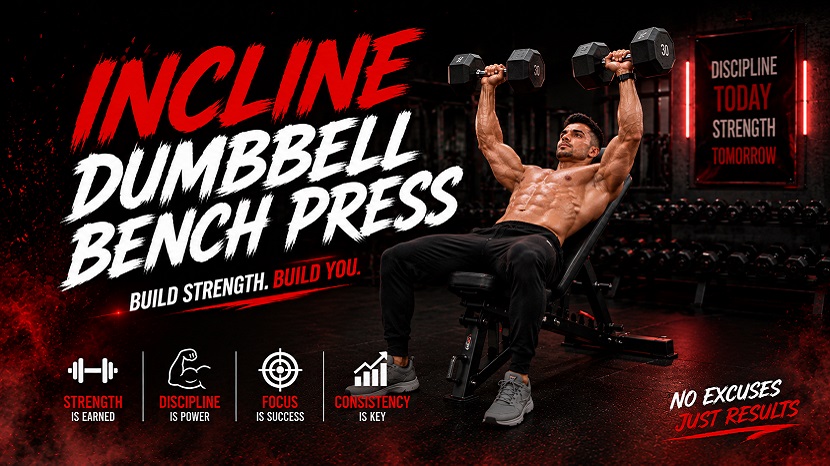
The incline dumbbell bench press stands out as one of the most effective compound movements for developing a fuller, more balanced upper chest. Whether you train at home or in a commercial gym, mastering this exercise can transform the way your chest looks and performs. Unlike flat pressing variations, the incline dumbbell press shifts emphasis upward, helping lifters create that desirable shelf-like appearance many seek.
If you have been struggling with upper chest development or want to add variety to your pushing workouts, learning how to do incline dumbbell bench press correctly is essential. This guide covers everything from the muscles worked by incline dumbbell press to the best angle for incline dumbbell press, proper technique, common errors, and smart programming advice.
Contents Overview
- What Is the Incline Dumbbell Bench Press?
- Muscles Worked by Incline Dumbbell Press
- Key Incline Dumbbell Bench Press Benefits
- Best Angle for Incline Dumbbell Press
- How to Do Incline Dumbbell Bench Press: Step-by-Step
- Proper Form for Incline Dumbbell Press: Essential Tips
- Common Mistakes to Avoid in Incline Dumbbell Chest Press
- Incline vs Flat Dumbbell Press Comparison
- Sets, Reps, and Smart Programming
- Variations and Alternatives
- Safety Considerations and Recovery
- Conclusion
- FAQs
What Is the Incline Dumbbell Bench Press?
The incline dumbbell bench press is a compound pushing exercise performed on an adjustable bench set at an upward angle. You lie back, hold a dumbbell in each hand, and press the weights upward from chest level until your arms are extended. The inclined position changes the angle of resistance compared with flat bench work, placing greater demand on the upper portion of the chest.
Because each arm works independently, the movement also helps correct strength imbalances between sides. Many lifters find the incline dumbbell chest press more joint-friendly than barbell versions since the dumbbells allow a more natural arc and deeper stretch at the bottom.
Muscles Worked by Incline Dumbbell Press
Understanding the muscles worked by incline dumbbell press helps you appreciate why this exercise deserves a regular place in your program. The primary target is the clavicular head of the pectoralis major, commonly called the upper chest. This portion of the muscle runs from the collarbone down toward the upper arm and contributes to that full, rounded look when developed.
The anterior deltoids, or front shoulders, receive significant work as well. They assist in driving the dumbbells upward, especially during the initial phase of the lift. The triceps brachii act as secondary movers, extending the elbows at the top of each repetition.
Stabilizer muscles around the shoulder blades and core stay active throughout to keep your torso steady on the inclined bench. Because dumbbells demand more control than a barbell, you also recruit smaller stabilizing muscles in the rotator cuff and upper back. This extra demand improves overall shoulder health and pressing strength when performed with good technique.
Key Incline Dumbbell Bench Press Benefits
The incline dumbbell bench press benefits extend far beyond simple muscle growth. First, it directly targets the often-underdeveloped upper chest, creating better balance between the upper and lower portions of the pectoralis major. This balance improves posture and gives the chest a more three-dimensional appearance.
Second, the exercise strengthens the front deltoids in a functional pressing pattern that carries over to overhead movements and daily activities. Third, the independent arm action helps eliminate left-to-right strength differences that can develop from years of barbell training.
Fourth, dumbbells permit a greater range of motion than a barbell. At the bottom position you can lower the weights slightly below chest level, creating a deeper stretch in the upper chest fibers. This stretch under load is highly effective for hypertrophy. Finally, the movement builds pressing confidence and strength that transfers to flat bench performance, making your overall chest workouts more productive.
Best Angle for Incline Dumbbell Press
Choosing the best angle for incline dumbbell press makes a noticeable difference in results. Research and practical experience point to approximately 30 degrees from horizontal as the sweet spot. At this moderate incline, the upper chest receives maximum activation while the front deltoids do not take over the movement.
When the bench is set much steeper, around 45 to 60 degrees, the exercise begins to resemble an overhead press. The front shoulders dominate, and upper chest involvement decreases. On the other hand, an angle below 15 degrees starts to behave more like a flat press and loses its upper-chest emphasis.
Most adjustable benches allow precise settings. If your bench only has preset positions, select the one closest to 30 degrees. Some lifters experiment between 25 and 35 degrees to find their personal optimal angle based on shoulder mobility and chest structure. Start at 30 degrees and adjust slightly if you feel excessive front shoulder fatigue or insufficient upper chest pump.
How to Do Incline Dumbbell Bench Press: Step-by-Step
Learning how to do incline dumbbell bench press with precision protects your shoulders and maximizes chest development. Follow these steps carefully.
- Step 1: Set an adjustable bench to approximately 30 degrees. Place a pair of dumbbells on the floor or on your thighs if the weight is manageable.
- Step 2: Sit on the bench with your feet flat on the floor, slightly wider than shoulder-width. Hold one dumbbell in each hand and rest them on your thighs.
- Step 3: Lie back while using your thighs to help kick the dumbbells into position above your chest. Your palms should face forward or slightly angled inward in a comfortable neutral position.
- Step 4: Plant your feet firmly, squeeze your glutes into the bench, and pull your shoulder blades down and back. Create a small natural arch in your lower back without excessive overarching.
- Step 5: Position the dumbbells directly above your upper chest with arms fully extended but elbows not locked. This is your starting position.
- Step 6: Inhale and slowly lower the dumbbells toward the upper chest. Keep your elbows at roughly a 45-degree angle to your torso rather than flaring them wide. Lower until your elbows are level with or slightly below your shoulders for a good stretch.
- Step 7: Pause briefly at the bottom, then exhale and drive the dumbbells upward in a slight arc until your arms are extended again. Focus on squeezing the upper chest at the top without banging the weights together.
- Step 8: Repeat for the desired number of repetitions. When finished, carefully lower the dumbbells back to your thighs or the floor with control.
Proper Form for Incline Dumbbell Press: Essential Tips
Proper form for incline dumbbell bench press determines whether you build the upper chest or simply stress your shoulders and joints. Keep your shoulder blades retracted throughout the entire set. This stable base allows the chest to do the majority of the work.
Maintain a controlled tempo. Lower the weights for two to three seconds and press upward with intent but without momentum. Avoid bouncing the dumbbells off your chest. Keep your head, upper back, and glutes in contact with the bench at all times.
Think about driving the dumbbells slightly back toward your head rather than straight up. This path better aligns with the fiber direction of the upper chest. At the top of each rep, actively squeeze your chest muscles for a one-second pause before beginning the next lowering phase. This mind-muscle connection dramatically improves results over time.
Common Mistakes to Avoid in Incline Dumbbell Chest Press
Even experienced lifters make errors that reduce effectiveness or increase injury risk during the incline dumbbell chest press. One frequent mistake is setting the bench angle too high. Anything above 45 degrees shifts the load heavily onto the front deltoids and away from the upper chest.
Another common error is flaring the elbows out to the sides like a T-shape. This position places unnecessary stress on the shoulder joints. Keep elbows tucked at about 45 degrees throughout the movement.
Many people also use excessive arching or lift their hips off the bench to generate momentum. This cheating reduces chest tension and can strain the lower back. Keep your glutes glued to the bench and maintain only a small natural arch.
Rushing the eccentric or lowering phase is another issue. Fast lowering robs you of the stretch that makes this exercise so effective for growth. Finally, choosing weights that are too heavy forces poor form and limits range of motion. Start lighter, master the technique, then add weight gradually.
Incline vs Flat Dumbbell Press Comparison
Understanding the differences in incline vs flat dumbbell press helps you decide how to program both movements effectively.
| Aspect | Incline Dumbbell Press | Flat Dumbbell Press |
|---|---|---|
| Primary Muscle Emphasis | Upper chest (clavicular head) and front deltoids | Mid and lower chest with balanced overall pec development |
| Shoulder Involvement | Higher | Moderate |
| Best For | Upper chest aesthetics and balanced pressing strength | Overall chest mass and raw pressing power |
| Range of Motion | Excellent stretch in upper chest | Excellent stretch across entire chest |
| Joint Stress | Generally shoulder-friendly when form is good | Can be more stressful on shoulders for some lifters |
| Recommended Frequency | 1-2 times per week | 1-2 times per week |
Most complete chest programs include both variations. Perform the incline dumbbell bench press early in your workout when you are fresh, then follow with flat work or fly movements for complete development.
Sets, Reps, and Smart Programming
For muscle growth, aim for 3 to 4 sets of 8 to 12 repetitions on the incline dumbbell press. This rep range balances mechanical tension and metabolic stress, both important drivers of hypertrophy. Rest 2 to 3 minutes between sets to maintain quality repetitions.
If your primary goal is strength, use 4 to 5 sets of 4 to 6 heavier repetitions with longer rest periods of 3 minutes. Beginners should start with 2 to 3 sets of 10 to 12 reps using lighter weights to groove the movement pattern.
Place the exercise early in your chest or push workout. A simple effective structure could be: incline dumbbell bench press, flat dumbbell press or barbell bench, then a chest isolation movement such as cable flyes or dumbbell pullovers. Train the movement 1 to 2 times per week with at least 48 hours of recovery between sessions.
Variations and Alternatives
Once you master the basic incline dumbbell bench press, you can add variety. The neutral-grip version reduces shoulder stress for some lifters. Alternating-arm presses increase time under tension and core demand.
If dumbbells feel unstable, try the incline machine press or Smith machine incline press for a more fixed path. For a greater stretch, perform a slight pause at the bottom or add a slow eccentric tempo of four seconds on the lowering phase.
Good alternatives when equipment is limited include incline push-ups with feet elevated, landmine incline presses, or resistance band incline presses. Each variation still targets the upper chest while providing different stability challenges.
Safety Considerations and Recovery
Safety starts with proper warm-up. Spend 5 to 10 minutes doing light cardio and dynamic shoulder mobility drills before loading the incline dumbbell press. Include band pull-aparts or face pulls to activate the rear delts and upper back.
Never sacrifice form for heavier weight. If your shoulders begin to ache or you lose scapular retraction, reduce the load immediately. Use a spotter or safety pins when pushing near-maximal weights. Listen to your body and take deload weeks every 6 to 8 weeks to allow full recovery of joints and connective tissue.
Support recovery with adequate protein intake, good sleep, and mobility work for the chest and shoulders. Foam rolling the upper back and stretching the front deltoids and pecs after workouts can reduce tightness and improve next-session performance.
Conclusion
The incline dumbbell bench press is a proven tool for building upper chest strength, improving pressing mechanics, and creating balanced aesthetics. By understanding the muscles worked by incline dumbbell press, choosing the best angle for incline dumbbell press, and practicing proper form for incline dumbbell bench press, you set yourself up for consistent progress.
Compare it thoughtfully with flat variations using the incline vs flat dumbbell press insights, then apply smart sets and reps. Avoid the common mistakes outlined earlier, and you will get far more out of every session.
Start implementing the incline dumbbell chest press with focus and patience. Over weeks and months you will notice improved upper chest development, stronger pressing performance, and greater confidence in the gym. Train smart, stay consistent, and enjoy the results of a well-developed upper chest.
Frequently Asked Questions (FAQs)
1. What is the Incline Dumbbell Bench Press and what muscles does it primarily target?
Answer: The Incline Dumbbell Bench Press is a compound upper-body exercise performed on an adjustable bench set at an incline angle. You press a pair of dumbbells from chest level upward until your arms are fully extended. It primarily targets the upper chest, specifically the clavicular head of the pectoralis major, giving the upper pecs a fuller, more balanced appearance. It also strongly engages the anterior deltoids (front shoulders) and triceps brachii, while the core and scapular muscles work to stabilize the body throughout the movement.
2. What are the key benefits of the Incline Dumbbell Bench Press?
Answer: This exercise excels at developing the often-lagging upper chest for improved aesthetics and chest proportion. It builds functional pressing strength in inclined angles that transfer well to sports and daily activities. Because each arm works independently, it helps correct left-to-right muscle imbalances. The dumbbell version allows a greater range of motion and deeper stretch than barbell presses, while many lifters find it more shoulder- and wrist-friendly when performed correctly. When programmed properly, it also supports better posture and overall upper-body stability.
3. How do you perform the Incline Dumbbell Bench Press with proper form?
Answer: Follow these steps for safe and effective technique:
- Set the bench to a 30-45 degree incline and sit with a dumbbell resting on each thigh.
- Lie back while simultaneously bringing the dumbbells to the sides of your upper chest, palms facing forward.
- Plant your feet flat on the floor, brace your core, and retract your shoulder blades (pull them down and back).
- Press the dumbbells upward and slightly inward in a smooth arc until your arms are extended above your upper chest.
- Squeeze your upper chest hard at the top for one second, then slowly lower the weights with control until you feel a stretch in the upper pecs.
- Exhale as you press and inhale as you lower. Keep the movement controlled and avoid locking your elbows forcefully or using momentum.
4. What is the ideal incline angle for the Incline Dumbbell Bench Press?
Answer: The most effective bench angle is between 30 and 45 degrees. A 30-degree setting provides excellent upper-chest activation while keeping front-delt involvement moderate. Angles closer to 45 degrees increase shoulder recruitment, which can be useful for deltoid development but slightly reduces pure chest emphasis. Avoid angles above 60 degrees, as the movement then shifts heavily toward an overhead shoulder press. Experiment within the 30-45 degree range to find what feels best for your body and goals, and always ensure the bench is securely locked before beginning your set.
5. What are the most common mistakes people make with the Incline Dumbbell Bench Press?
Answer: The most frequent errors include:
- Setting the bench too steep (above 45-60 degrees), which turns the exercise into a shoulder-dominant movement.
- Flaring the elbows out wide (near 90 degrees) instead of keeping them at a 30-45 degree angle from the body, increasing shoulder stress.
- Using momentum by bouncing the weights off the chest or excessively arching the lower back.
- Performing partial reps or rushing the lowering (eccentric) phase.
- Choosing weights that are too heavy, causing form breakdown and higher injury risk.
- Failing to retract and stabilize the shoulder blades before and during the press. To avoid these issues, always start lighter, focus on control and mind-muscle connection, and consider filming your sets for feedback.
6. How does the Incline Dumbbell Bench Press compare to the Flat Dumbbell Bench Press?
Answer: The Incline Dumbbell Bench Press places greater emphasis on the upper chest (clavicular head), while the Flat Dumbbell Bench Press targets the middle and lower portions of the chest (sternal head) for overall thickness and mass. Both exercises are highly effective and work best when used together in a complete chest program. If your upper chest is underdeveloped, prioritize incline variations. You will generally handle slightly less weight on the incline version. The flat press often feels more stable for beginners and allows heavier loading. Including both flat and incline movements provides the most balanced chest development for the majority of lifters.
7. What sets, reps, and frequency are recommended for the Incline Dumbbell Bench Press?
Answer: For muscle growth (hypertrophy), perform 3-4 sets of 8-12 repetitions with 60-90 seconds of rest between sets. For building strength, use 4-5 sets of 4-8 reps with heavier weights and 2-3 minutes of rest. Beginners should start with 2-3 sets of 10-15 reps using light weights to master technique. Include this exercise 1-2 times per week as part of your chest or push workout, allowing at least 48 hours of recovery between intense chest sessions. Always begin with a thorough warm-up consisting of lighter sets and mobility work to prepare your shoulders and upper chest.
8. What variations, alternatives, and progression tips are there for the Incline Dumbbell Bench Press?
Answer: Beginners can safely start with very light dumbbells or practice on an incline chest press machine to learn the movement pattern. Key form cues include keeping elbows at 30-45 degrees, maintaining scapular retraction, and using a controlled tempo. As you advance, progress by gradually increasing weight while preserving perfect form. Advanced variations and techniques include slow eccentric lowering (3-5 seconds), paused reps at the bottom, 1.5 reps (full rep plus a half rep), drop sets, and supersets with flat presses or flyes. You can also try a neutral grip (palms facing each other) for variety and potential shoulder comfort, or perform single-arm versions to increase core demand and address imbalances.