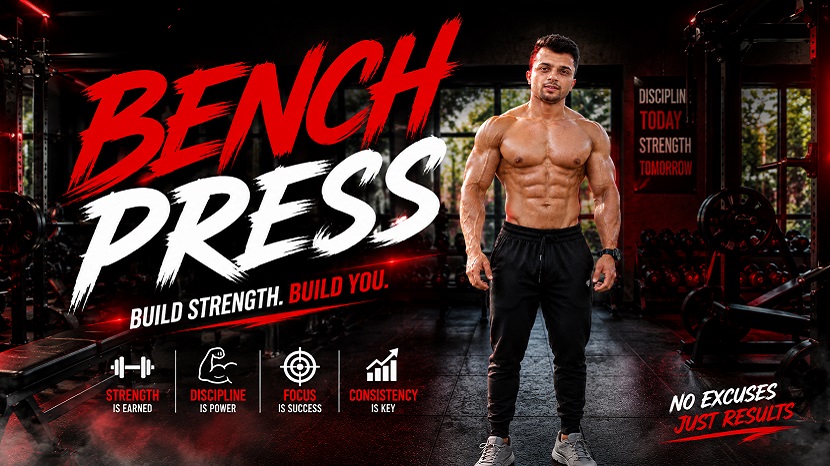
The bench press stands as one of the most effective and popular upper body exercises in strength training. Whether you are a beginner looking to build a solid foundation or an experienced lifter aiming to increase bench press numbers, mastering this movement delivers impressive results in chest development, overall upper body power, and functional strength.
In this comprehensive guide, you will learn everything needed to perform the bench press safely and effectively. From proper setup and bench press technique to common mistakes, bench press variations, and programming tips for your chest workout, this article provides actionable advice backed by established training principles.
Contents Overview
- What Is the Bench Press and Why It Matters
- Muscles Worked by the Bench Press
- How to Bench Press with Proper Form
- Bench Press Variations for Balanced Development
- Common Bench Press Mistakes and How to Fix Them
- Programming Your Bench Press Workout
- Tips to Increase Bench Press Strength Safely
- Safety Considerations and Equipment
- Conclusion
- FAQs
What Is the Bench Press and Why It Matters
The bench press is a compound movement where you lie on a flat bench and press a weighted barbell or dumbbells upward from your chest. It serves as a cornerstone exercise in many chest workout routines because it targets multiple muscle groups simultaneously while allowing for progressive overload.
Athletes, bodybuilders, and recreational lifters all rely on the bench press for good reason. It builds raw pushing power useful in sports and daily activities. Regular practice also boosts confidence in the gym as visible progress motivates continued training.
Understanding how to bench press correctly from the start prevents injuries and maximizes gains. Many people rush into heavy lifting without mastering basics, leading to plateaus or setbacks.
Muscles Worked by the Bench Press
The bench press primarily targets the pectoralis major, the large fan-shaped muscle covering the chest. It also engages supporting muscles for a complete upper body stimulus.
- Primary muscles: Pectoralis major (chest) for horizontal pressing.
- Secondary muscles: Anterior deltoids (front shoulders) and triceps brachii (back of upper arms) for stabilization and lockout.
- Stabilizers: Rotator cuff, scapular muscles, core, glutes, and legs contribute to a stable platform.
This multi-muscle activation makes the bench press highly efficient compared to isolation exercises. Variations shift emphasis—for example, a narrower grip increases triceps involvement while a wider grip highlights the outer chest.
Benefits Beyond Muscle Growth
Consistent bench press workout sessions improve bone density, enhance upper body endurance, and support better posture. The exercise also promotes mental toughness through handling challenging loads with control.
How to Bench Press with Proper Form
Mastering proper bench press form is essential for results and injury prevention. Follow these steps for a standard barbell bench press.
Step-by-Step Setup and Execution
- Position yourself: Lie on the bench with eyes directly under the bar. Plant feet flat on the floor for stability.
- Grip the bar: Use a grip slightly wider than shoulder-width. Thumbs wrapped around the bar ensures control.
- Retract shoulder blades: Squeeze them together and down, creating a slight natural arch in your upper back. Keep this position throughout.
- Unrack the bar: Lift it off the rack with straight arms and position it above your mid-chest.
- Lower the bar: Breathe in and lower with control to the mid-chest. Elbows stay at about a 45-degree angle from your body.
- Press up: Drive through heels, chest, and triceps to press the bar back up in a slight arc. Exhale at the top and lock elbows without hyperextending.
Practice bench press technique with lighter weights or an empty bar to ingrain good habits. Film yourself or work with a coach for feedback.
Bench Press Variations for Balanced Development
Incorporating bench press variations prevents boredom, addresses weaknesses, and promotes well-rounded growth.
- Dumbbell Bench Press: Greater range of motion and independent arm work improves stability and fixes imbalances.
- Incline Bench Press: Emphasizes upper chest and shoulders.
- Decline Bench Press: Targets lower chest more intensely.
- Close-Grip Bench Press: Shifts focus to triceps.
- Paused Bench Press: Builds explosive power off the chest by eliminating momentum.
Rotate these into your routine every few weeks for continued progress.
Common Bench Press Mistakes and How to Fix Them
Avoiding errors keeps your chest workout safe and effective.
- Flaring elbows too wide: Causes shoulder strain. Keep elbows at 45 degrees.
- Bouncing the bar off the chest: Uses momentum instead of muscle. Lower with control and pause briefly.
- Lifting hips off the bench: Reduces stability. Keep glutes in contact.
- Short range of motion: Limits growth. Touch the chest on every rep (within safe limits).
- Poor wrist alignment: Causes discomfort. Keep wrists straight over elbows.
Fixing these improves proper bench press form and strength gains.
Programming Your Bench Press Workout
Structure your sessions for optimal results. A sample beginner bench press workout:
| Exercise | Sets | Reps | Rest |
|---|---|---|---|
| Bench Press | 4 | 6-8 | 2-3 min |
| Dumbbell Bench Press | 3 | 8-12 | 90 sec |
| Incline Dumbbell Press | 3 | 10-12 | 90 sec |
| Tricep Dips or Extensions | 3 | 10-15 | 60 sec |
Train chest 1-2 times per week with adequate recovery. Progress by adding weight or reps gradually.
Tips to Increase Bench Press Strength Safely
To increase bench press numbers:
- Focus on consistent progressive overload.
- Include accessory work like rows for balanced development.
- Prioritize recovery with sleep, nutrition, and mobility work.
- Use proper warm-ups and consider deload weeks.
- Track your workouts to monitor progress.
Patience and smart programming yield better long-term results than chasing quick gains.
Safety Considerations and Equipment
Always use a spotter or safety bars for heavy lifts. Start light to master bench press form. Invest in quality equipment: a sturdy bench, Olympic barbell, and collars.
Listen to your body. Any sharp pain (beyond normal muscle fatigue) requires stopping and consulting a professional.
Conclusion
The bench press remains a king among chest workout exercises for good reason. By focusing on proper bench press form, incorporating smart bench press variations, and following a structured bench press workout plan, you can build impressive strength and muscle while minimizing injury risk.
Apply these principles consistently. Track progress, stay patient, and enjoy the journey of getting stronger. Your future self will thank you for investing time in learning how to bench press the right way.
Start today with lighter weights, perfect your bench press technique, and watch your numbers climb while your chest develops. Stronger, more confident lifts await.
Frequently Asked Questions (FAQs)
1. What is the bench press exercise and why is it important for a chest workout?
Answer: The bench press is a classic compound exercise where you lie on a flat bench and press a barbell or dumbbells upward from your chest. It is a cornerstone of effective chest workouts because it targets the pectoral muscles while also engaging the shoulders, triceps, and core stabilizers. Regular bench pressing builds upper body strength, improves pushing power, and supports muscle hypertrophy, making it essential for beginners and advanced lifters alike.
2. How do I perform the bench press with proper form?
Answer: To execute proper bench press form, lie on the bench with your eyes under the bar, feet flat on the floor, and shoulder blades retracted. Grip the bar slightly wider than shoulder-width, unrack it, lower it controllably to your mid-chest with elbows at a 45-degree angle, then press it back up explosively while maintaining a stable arch in your upper back. Always prioritize controlled movement over heavy weight to avoid injury.
3. What muscles does the bench press work?
Answer: The bench press primarily targets the pectoralis major (chest muscles). It also heavily engages the anterior deltoids (front shoulders) and triceps brachii. Stabilizer muscles include the rotator cuff, scapular muscles, core, glutes, and legs, making it an excellent full upper-body compound movement when performed correctly.
4. What is the difference between barbell and dumbbell bench press?
Answer: The barbell bench press allows for heavier loads and is great for building overall strength. The dumbbell bench press offers a greater range of motion, helps correct muscle imbalances, and improves shoulder stability. Many lifters incorporate both in their chest workout routines for balanced development.
5. How often should I include bench press in my workout routine?
Answer: Beginners can benefit from bench pressing 1-2 times per week with at least 48 hours of recovery between sessions. Intermediate and advanced lifters may train it 2-3 times weekly using variations to allow for higher volume while managing fatigue. Always prioritize recovery, nutrition, and progressive overload for best results.
6. What are the best bench press variations for chest development?
Answer: Effective variations include the incline bench press for upper chest emphasis, decline for lower chest, close-grip for triceps focus, paused bench press for power off the chest, and dumbbell bench press for stability. Rotating these in your chest workout prevents plateaus and ensures balanced muscle growth.
7. How can I increase my bench press strength safely?
Answer: To increase bench press numbers, focus on consistent progressive overload by adding small amounts of weight or reps over time. Incorporate accessory exercises like rows and tricep work, maintain proper form, eat in a calorie surplus with adequate protein, and include deload weeks. Patience and smart programming yield sustainable progress.
8. What are common bench press mistakes beginners make?
Answer: Common errors include flaring elbows too wide, bouncing the bar off the chest, lifting the hips off the bench, using excessive arch without control, and neglecting leg drive. Correcting these through practice with lighter weights helps improve technique and reduces injury risk.
9. Is the bench press safe for shoulders, and how can I protect them?
Answer: When performed with proper bench press form, the exercise is generally safe. Protect your shoulders by warming up thoroughly, keeping elbows at a 45-degree angle, avoiding excessive weight too soon, and incorporating mobility work and rear delt exercises. Stop immediately if you feel sharp pain and consult a professional if needed.
10. Should I use a spotter or safety bars when bench pressing?
Answer: Yes, especially when lifting heavy weights near your maximum. A spotter provides confidence and safety, while safety bars or a power rack allow solo training with a safety net. Never attempt heavy single reps without one of these precautions to avoid serious accidents.