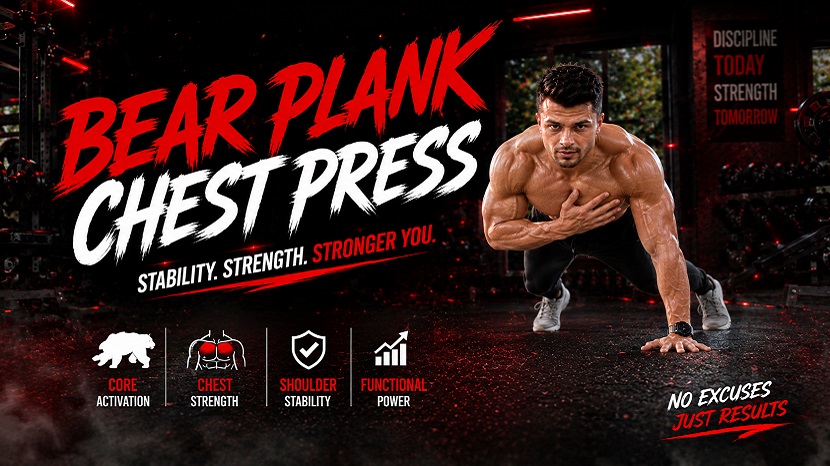

If you want to build a stronger, more defined chest without any equipment, push ups for chest are one of the most effective exercises you can do. This classic bodyweight movement targets your chest muscles directly while also working your shoulders, triceps, and core. Learning how to do push ups correctly with solid proper push up form helps you get maximum results and avoid injury. Whether you are a beginner or already training regularly, understanding push up variations for chest lets you target different parts of your chest and keep making progress.
In this guide you will discover the real benefits of push ups, step-by-step instructions for perfect form, the best wide grip push ups and diamond push ups for chest, plus incline push ups chest modifications. You will also get a practical push up workout routine you can follow at home and clear progression tips so your chest workout with push ups keeps delivering results.
Contents Overview
- How to Do Push Ups Correctly: Proper Push Up Form
- Push Up Variations for Chest: Wide Grip, Diamond, Incline and More
- Benefits of Push Ups for Chest Development
- Common Mistakes to Avoid in Your Chest Workout with Push Ups
- Sample Push Up Workout Routine for Chest Gains
- Progressing Your Push Ups for Chest and Advanced Techniques
- Nutrition and Recovery to Support Chest Results from Push Ups
- Final Thoughts
- FAQs
How to Do Push Ups Correctly
Mastering how to do push ups correctly starts with understanding proper push up form. Good form protects your shoulders and lower back while maximizing chest activation. Follow these steps every time you train.
- Step 1: Start in a high plank position with your hands placed slightly wider than your shoulders. Your fingers point forward or slightly outward. Keep your wrists under your shoulders or just outside them.
- Step 2: Extend your legs straight behind you with feet together or hip-width apart. Balance on the balls of your feet. Your body should form a straight line from head to heels.
- Step 3: Engage your core by gently pulling your belly button toward your spine. Squeeze your glutes to keep your hips from sagging or rising too high. This plank position is essential for safety and chest focus.
- Step 4: Look down at the floor a few inches in front of your hands to keep your neck neutral and your spine aligned.
- Step 5: Take a deep breath in as you lower your body in a controlled manner. Bend your elbows to about a 45-degree angle from your torso. Lower until your chest is just above the floor or your elbows reach roughly 90 degrees.
- Step 6: At the bottom, keep your body tight. Avoid letting your chest collapse or your hips drop.
- Step 7: Exhale forcefully as you push through your palms to return to the starting position. Drive the movement from your chest. Do not lock your elbows at the top; keep a slight bend to maintain tension.
- Step 8: Repeat for the desired number of reps while maintaining the same quality on every repetition. Quality always beats quantity.
When you focus on proper push up form, you feel your chest working hard. Think about squeezing your chest muscles at the top of each rep as if you are trying to bring your hands together. This mind-muscle connection helps you get better results from every set in your chest workout with push ups.
Push Up Variations for Chest
Once you have solid proper push up form, push up variations for chest let you target different areas and add new challenges. Changing hand position or body angle shifts emphasis so you develop a fuller, more balanced chest.
1. Wide Grip Push Ups
Wide grip push ups are excellent for emphasizing the outer portion of your chest. Place your hands wider than shoulder width, about one and a half to two shoulder widths apart. Keep your elbows at 45 degrees as you lower. This position creates a greater stretch across the chest muscles. Use this variation in your push up workout routine to build chest width. Avoid going too wide, as it can stress the shoulders.
2. Diamond Push Ups for Chest
Diamond push ups for chest bring your hands close together under your chest so your thumbs and index fingers form a diamond shape. This variation increases work on the inner chest and triceps while still training the overall pecs. Lower with control and keep your elbows tucked close to your body. It is more challenging than standard push ups, so start with fewer reps and focus on form.
3. Incline Push Ups Chest
Incline push ups chest are perfect for beginners and for targeting the lower chest fibers. Place your hands on a sturdy bench, chair, or step so your upper body is elevated. The higher the surface, the easier the movement becomes. This variation reduces load on your shoulders and wrists while still building chest strength. It is a great way to practice how to do push ups correctly before moving to the floor.
4. Decline Push Ups
Decline push ups (feet elevated on a bench or sturdy surface) increase the challenge and shift more emphasis to the upper chest. Keep your core tight and maintain the straight body line. This variation is excellent once standard push ups feel easy.
| Variation | Primary Chest Area | Difficulty | Key Benefit |
|---|---|---|---|
| Standard Push Up | Overall chest | Intermediate | Balanced development and foundation |
| Wide Grip Push Ups | Outer chest | Intermediate to Advanced | Builds chest width and stretch |
| Diamond Push Ups for Chest | Inner chest and triceps | Advanced | Targets inner pecs and arm strength |
| Incline Push Ups Chest | Lower chest | Beginner | Easier entry point and lower chest focus |
| Decline Push Ups | Upper chest | Intermediate to Advanced | Increases load and upper chest emphasis |
Rotate through these push up variations for chest in your training to prevent boredom and plateaus. Each one adds variety while still delivering the core benefits of push ups.
Benefits of Push Ups for Chest Development
Push ups for chest deliver serious results because they are a true compound exercise. They work multiple muscle groups at once, which means you build strength and muscle efficiently. The main chest muscles, called the pectoralis major or pecs, do most of the work during the pushing phase. This leads to better chest size and strength over time when you train consistently.
One of the top benefits of push ups is improved upper body strength. Your chest, front shoulders, and triceps all get stronger together. This carries over to everyday activities like pushing doors, carrying groceries, or playing sports. Strong chest muscles also help improve your posture by pulling your shoulders back and countering the forward hunch many people develop from sitting.
Push ups for chest also build core stability. Your abs and lower back must stay tight to keep your body in a straight line. This extra core work improves balance and reduces lower back discomfort. Because you use your own body weight, push ups are completely free and can be done anywhere, making them perfect for home workouts or when you travel.
Research and fitness experts note that regular push up training supports bone health and can even offer cardiovascular benefits when performed in higher reps or circuits. You burn calories, build functional strength that protects your shoulders and back, and gain confidence as you see your numbers improve. Best of all, push ups for chest require no gym membership, so anyone can start today.
Common Mistakes to Avoid in Your Chest Workout with Push Ups
Even experienced trainees sometimes make errors that reduce chest gains or cause discomfort. Avoiding these common mistakes will keep your chest workout with push ups safe and effective.
- Sagging or piking hips: This breaks the straight line and shifts work away from the chest. Fix it by keeping your core and glutes engaged the entire time.
- Flaring elbows out wide: Elbows at 90 degrees or more put extra stress on the shoulders. Keep them at roughly 45 degrees for better chest activation and joint safety.
- Partial range of motion: Only going halfway down limits chest stretch and growth. Lower until your chest is close to the floor on every rep.
- Using momentum or bouncing: Dropping quickly and bouncing off the floor reduces muscle tension. Move with control on the way down and push explosively but smoothly on the way up.
- Looking up or dropping the head: This misaligns the spine. Keep your gaze on the floor to maintain a neutral neck position.
- Neglecting the squeeze at the top: Failing to contract the chest at the top of each rep misses an important part of the movement. Consciously squeeze your chest muscles as you finish each push.
Record yourself on video occasionally to check your form. Small corrections lead to bigger chest gains and fewer injuries over time.
Sample Push Up Workout Routine for Chest Gains
A well-designed push up chest workout balances volume, intensity, and recovery. The following routine works well for intermediate trainees. Beginners should reduce sets or use easier variations, while advanced athletes can add pauses or slower tempos.
Perform this workout two to three times per week with at least one rest day between sessions. Warm up with arm circles, band pull-aparts, and a few easy incline push ups before starting the main work.
| Exercise | Sets | Reps | Rest | Notes |
|---|---|---|---|---|
| Wide Push Ups for Chest | 4 | 8-12 | 90 seconds | Focus on full range and chest squeeze at top |
| Decline Push Ups for Chest | 3 | 6-10 | 90 seconds | Elevate feet 12-18 inches, control the lowering phase |
| Standard Push Ups with Pause | 3 | 10-15 | 60 seconds | 3-second lower, 1-second pause at bottom |
| Archer Push Ups (each side) | 3 | 5-8 per side | 60 seconds | Keep hips level, drive through working arm |
Finish the session with a short core circuit such as planks and dead bugs to reinforce the stability you built during the push ups. Track your total reps each week and aim to add a few extra repetitions or an additional set over time.
Progressing Your Push Ups for Chest and Advanced Techniques
To keep building your chest, you must make push ups for chest progressively harder over time. Progressive overload is the principle that drives muscle growth. Once regular push ups feel easy, try these methods.
- Increase reps or sets gradually each week.
- Slow the lowering phase to 3 or 4 seconds for more time under tension.
- Add pauses of 1-2 seconds at the bottom position.
- Move to decline push ups or elevate your feet slightly.
- Try lengthened partial reps by staying in the bottom half of the movement for extra chest work.
- Advance to archer push ups or explosive plyometric push ups once you have built a strong base.
- Add a light weighted vest or backpack for extra resistance when bodyweight alone is no longer challenging.
Listen to your body. If you feel joint pain (not muscle fatigue), reduce intensity or take an extra rest day. Consistent, smart progression with push up variations for chest will deliver impressive results without needing a gym.
Nutrition and Recovery to Support Chest Results from Push Ups
Your muscles grow and repair outside the workout. To maximize results from your chest workout with push ups, support your body with good nutrition and recovery habits.
Eat enough protein to repair and build muscle tissue. Aim for roughly 1.6 to 2.2 grams of protein per kilogram of body weight daily from sources like eggs, dairy, lean meats, fish, beans, lentils, and protein supplements if needed. Include carbohydrates around your workouts for energy and vegetables and healthy fats for overall health.
Sleep 7 to 9 hours each night. Most muscle repair and growth hormone release happens during deep sleep. On rest days, stay lightly active with walking or mobility work to promote blood flow without adding fatigue.
Stay hydrated throughout the day. Tight chest and shoulder muscles can limit performance, so add gentle stretches and foam rolling after workouts. Remember that consistency beats perfection. Showing up regularly with good form will produce better long-term chest development than occasional hard sessions.
Final Thoughts
Push ups for chest remain one of the simplest and most powerful exercises for building upper body strength and a stronger chest. When you learn how to do push ups correctly and maintain proper push up form, every rep counts. Adding push up variations for chest such as wide grip push ups, diamond push ups for chest, and incline push ups chest keeps training interesting and targets all areas of your chest.
Follow the push up workout routine outlined above, progress gradually, eat to support recovery, and stay consistent. In a few weeks you will notice better strength, improved posture, and visible changes in your chest. Start today with just a few quality sets. Your future self will thank you for building a stronger chest with nothing more than your own body weight and smart training.
Frequently Asked Questions (FAQs)
1. Are push ups effective for building chest muscle?
Answer: Yes, push ups are highly effective for building chest muscle when performed with proper form and consistent progressive overload. They primarily target the pectoralis major while also strengthening the shoulders, triceps, and core. By adjusting hand placement and body angle, you can emphasize different areas of the chest for balanced development over time.
2. What is the proper form for push ups to target the chest effectively?
Answer: Start in a high plank position with hands slightly wider than shoulder-width apart. Lower your chest toward the floor while keeping your elbows at roughly 45 degrees from your body. Maintain a straight line from head to heels, then push back up and squeeze your chest muscles at the top of each repetition. This technique maximizes chest activation and protects your shoulders.
3. How many push ups should beginners aim for per set?
Answer: Beginners should start with 3 sets of as many quality repetitions as they can perform with good form, typically between 5 and 12 reps per set. Focus on controlled movement and full range of motion rather than rushing for high numbers. As strength improves, gradually increase repetitions or move to more challenging variations.
4. Which push up variations are best for chest growth?
Answer: Wide grip push ups place greater emphasis on the outer chest fibers. Decline push ups with feet elevated target the upper chest more effectively. Standard push ups performed with a slow 3-4 second lowering phase and a brief pause at the bottom also deliver excellent overall chest stimulation. Archer push ups add a unilateral challenge for balanced strength.
5. Can push ups alone build a big chest?
Answer: Yes, many people successfully build impressive chests using only push ups by applying progressive overload through harder variations, increased volume, slower tempos, and added pauses. Once basic push ups become easy, advanced progressions like archer or one-arm variations provide enough stimulus for continued growth. Adding weights can accelerate results for some individuals but is not required.
6. How do I progress from knee push ups to full push ups?
Answer: First master knee push ups with perfect form and controlled movement. Next, move to incline push ups on a sturdy bench or step. Gradually lower the height of the surface over several weeks until you can perform full push ups from the floor with good technique. Consistency and patience are essential for safe, sustainable progress.
7. Should I perform push ups every day for chest growth?
Answer: Most people achieve better chest growth by training push ups 2 to 4 times per week with proper recovery between sessions. Daily training can work if volume stays moderate and you listen to your body, but rest days allow muscles to repair and grow stronger. Overtraining without recovery often leads to stalled progress or shoulder discomfort.
8. What are the most common push up mistakes that limit chest gains?
Answer: Common mistakes include flaring the elbows out wide, using incomplete range of motion, allowing the hips to sag, and rushing through reps with momentum. These errors reduce chest activation and increase strain on the shoulders. Always prioritize slow, controlled movement and maintain a rigid torso throughout every repetition.
9. Do decline push ups work the upper chest better than regular push ups?
Answer: Yes, decline push ups with feet elevated shift more load onto the upper portion of the chest muscles. This angle creates greater demand on the clavicular head of the pectoralis major compared to flat push ups. Combining decline push ups with regular and wide grip variations produces more balanced and complete chest development.
10. How can I avoid shoulder discomfort while doing push ups?
Answer: Keep your elbows at approximately 45 degrees from your torso instead of flaring them outward. Warm up thoroughly with shoulder mobility exercises before training. Avoid shrugging your shoulders toward your ears and maintain a neutral neck position. If discomfort continues, reduce range of motion temporarily or consult a fitness professional to address any imbalances.
11. Is it better to perform slow or fast push ups for chest muscle growth?
Answer: For optimal chest muscle growth, perform the lowering phase slowly over 3 to 4 seconds to increase time under tension. The upward phase can be more powerful but should remain controlled. This tempo technique recruits more muscle fibers in the chest without compromising form or increasing injury risk.
12. How long does it take to see visible results from push up training for the chest?
Answer: Most people notice improvements in strength within 2 to 4 weeks of consistent training. Visible changes in chest size and definition typically appear after 6 to 12 weeks when combined with proper nutrition, adequate protein intake, and progressive overload. Results vary based on training consistency, recovery quality, and individual genetics.