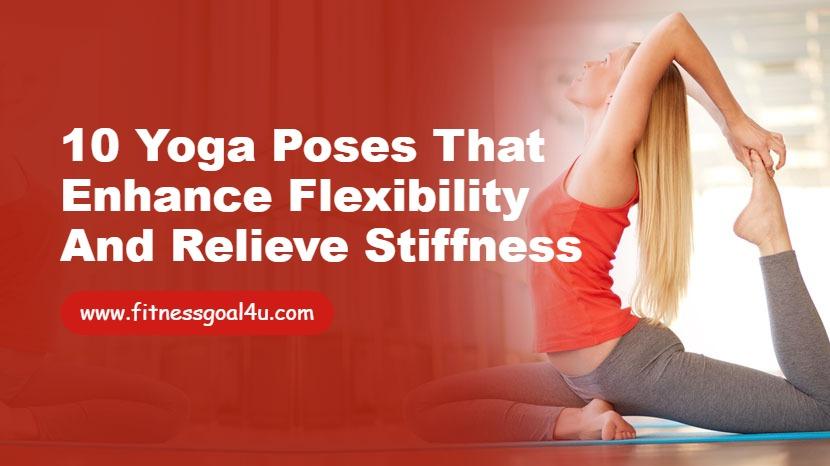
Flexibility and freedom of movement are essential for a healthy, active life. Modern lifestyles often involve long hours of sitting, limited physical movement, and high mental stress. Over time, this leads to muscle tightness, joint stiffness, and reduced mobility. Yoga offers a time-tested, science-backed solution to counter these issues naturally.
This detailed guide explores 10 powerful yoga poses that enhance flexibility and relieve stiffness. Each pose is carefully selected for its effectiveness, safety, and accessibility. Whether you are a beginner or an experienced practitioner, this guide will help you move better, feel lighter, and reduce everyday body discomfort.
Contents Overview
- Why Flexibility Matters for Overall Health
- How Yoga Improves Flexibility and Reduces Stiffness
- Common Causes of Muscle Stiffness
- Safety Guidelines Before Practicing Yoga
- Pose 1: Mountain Pose
- Pose 2: Forward Fold
- Pose 3: Downward Facing Dog
- Pose 4: Cat Cow Stretch
- Pose 5: Seated Forward Bend
- Pose 6: Butterfly Pose
- Pose 7: Cobra Pose
- Pose 8: Low Lunge
- Pose 9: Supine Spinal Twist
- Pose 10: Child’s Pose
- Comparison Table of Yoga Poses and Benefits
- How Often Should You Practice Yoga for Flexibility
- Conclusion and Key Takeaways
- FAQs
Why Flexibility Matters for Overall Health
Flexibility refers to the ability of muscles and joints to move through their full range of motion. It plays a critical role in posture, movement efficiency, and injury prevention.
When flexibility is limited, the body compensates by placing excess strain on joints and surrounding muscles. Over time, this can lead to chronic pain, reduced athletic performance, and mobility issues.
- Improves posture and alignment
- Reduces risk of muscle strains
- Supports joint health and mobility
- Enhances daily movement efficiency
How Yoga Improves Flexibility and Reduces Stiffness
Yoga combines controlled stretching, mindful breathing, and body awareness. Unlike aggressive stretching, yoga works gradually and safely, allowing muscles to lengthen without strain.
Holding poses for several breaths encourages muscles to relax instead of resist. Over time, this leads to improved tissue elasticity and joint mobility.
- Increases blood flow to muscles
- Reduces muscle tension and tightness
- Improves joint lubrication
- Calms the nervous system
Common Causes of Muscle Stiffness
Understanding the causes of stiffness helps prevent it effectively. Most people experience stiffness due to daily habits rather than injury.
- Prolonged sitting or poor posture
- Lack of regular movement
- Stress and mental tension
- Dehydration
- Overuse or repetitive movements
Safety Guidelines Before Practicing Yoga
Yoga is generally safe, but proper practice is essential to avoid discomfort or injury.
- Warm up gently before deeper stretches
- Never force a stretch
- Breathe slowly and evenly
- Stop immediately if pain occurs
Pose 1: Mountain Pose
Mountain Pose may appear simple, but it establishes proper alignment and body awareness.
This pose improves posture and gently activates muscles that support flexibility.
- Improves spinal alignment
- Enhances balance and posture
- Prepares the body for deeper stretches
Pose 2: Forward Fold
Forward Fold deeply stretches the hamstrings, calves, and lower back.
It also encourages relaxation by calming the nervous system.
- Lengthens hamstrings
- Releases lower back tension
- Improves circulation
Pose 3: Downward Facing Dog
This foundational pose stretches the entire back body while strengthening the arms and shoulders.
- Stretches calves and hamstrings
- Improves shoulder flexibility
- Relieves spinal compression
Pose 4: Cat Cow Stretch
Cat Cow is a gentle spinal flow that improves flexibility in the spine and neck.
- Improves spinal mobility
- Reduces stiffness in the back
- Enhances breathing coordination
Pose 5: Seated Forward Bend
This pose targets the spine, hips, and hamstrings while promoting relaxation.
- Improves hip flexibility
- Relieves lower back tension
- Encourages calm breathing
Pose 6: Butterfly Pose
Butterfly Pose opens the hips and inner thighs, which are common tight areas.
- Improves hip mobility
- Relieves pelvic stiffness
- Supports lower body flexibility
Pose 7: Cobra Pose
This gentle backbend stretches the front of the body and strengthens the spine.
- Opens the chest and shoulders
- Reduces lower back stiffness
- Improves spinal flexibility
Pose 8: Low Lunge
Low Lunge deeply stretches the hip flexors and thighs.
- Releases tight hips
- Improves lower body mobility
- Enhances balance and strength
Pose 9: Supine Spinal Twist
This pose gently twists the spine while relaxing the lower back.
- Improves spinal rotation
- Relieves back stiffness
- Promotes relaxation
Pose 10: Child’s Pose
Child’s Pose is deeply restorative and ideal for releasing full-body tension.
- Stretches the spine
- Relaxes hips and shoulders
- Calms the nervous system
Comparison Table of Yoga Poses and Benefits
| Yoga Pose | Primary Benefit | Main Area Targeted |
|---|---|---|
| Mountain Pose | Postural alignment | Full body |
| Forward Fold | Hamstring flexibility | Lower body |
| Downward Dog | Full-body stretch | Back and legs |
How Often Should You Practice Yoga for Flexibility
Consistency matters more than intensity. Practicing yoga 3 to 5 times per week delivers noticeable improvements in flexibility within a few weeks.
- Beginners: 15 to 30 minutes
- Intermediate: 30 to 45 minutes
- Advanced: 45 to 60 minutes
Conclusion and Key Takeaways
Yoga is one of the safest and most effective ways to improve flexibility and relieve stiffness naturally. By practicing these 10 yoga poses regularly, you can enhance mobility, reduce discomfort, and support long-term physical health.
Listen to your body, stay consistent, and allow flexibility to improve gradually. With patience and mindful practice, yoga can transform how your body feels and moves every day.
FAQ ( Frequently Asked Questions)
1. Can beginners practice these yoga poses for flexibility?
Answer: Yes, these yoga poses are beginner-friendly and can be safely practiced by people with little or no yoga experience. The key is to move slowly, avoid forcing stretches, and focus on proper breathing.
2. How long does it take to see flexibility improvements with yoga?
Answer: Most people notice improvements in flexibility within two to four weeks of consistent practice. Regular sessions help muscles gradually lengthen and reduce stiffness over time.
3. How often should I practice yoga to reduce stiffness?
Answer: Practicing yoga three to five times per week is ideal for reducing stiffness. Even short daily sessions can significantly improve mobility and joint comfort.
4. Can yoga help with stiffness caused by long sitting hours?
Answer: Yes, yoga is highly effective for stiffness caused by prolonged sitting. Poses that target the hips, hamstrings, and spine help release tension and restore natural movement.
5. Are these yoga poses safe for people with back pain?
Answer: Many of these poses are gentle and supportive for the back. However, people with existing back conditions should practice within comfort limits and avoid any movement that causes pain.
6. Should yoga be done in the morning or evening for flexibility?
Answer: Yoga can be practiced both in the morning and evening. Morning practice helps loosen stiffness after sleep, while evening practice relaxes tight muscles after a long day.
7. Do I need special equipment to practice these yoga poses?
Answer: No special equipment is required. A yoga mat provides comfort and stability, but all poses can be practiced with minimal space and basic support.
8. Can yoga replace stretching exercises for flexibility?
Answer: Yes, yoga can effectively replace traditional stretching exercises. Yoga not only improves flexibility but also enhances balance, strength, and relaxation.
9. Is it normal to feel mild soreness after yoga?
Answer: Mild soreness is normal, especially when starting yoga or trying new poses. This usually fades as the body adapts and flexibility improves.
10. Can older adults practice these yoga poses safely?
Answer: Yes, older adults can safely practice these yoga poses with proper modifications. Gentle movements and controlled breathing make yoga suitable for all age groups.