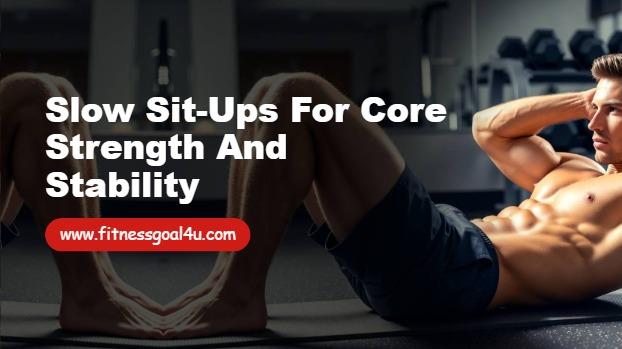
Slow Sit-ups are a controlled abdominal exercise focusing on the core muscles by performing each repetition slowly. Unlike regular sit-ups, the deliberate pace increases muscle engagement, improves stability, and enhances mind-muscle connection.
How (Step-by-Step Technique)
Step 1: Starting Position
Lie flat on your back on an exercise mat with your knees bent and feet flat on the floor. Place your hands lightly behind your head or crossed over your chest.
Step 2: Engage Core
Take a deep breath and gently engage your core muscles, keeping your lower back pressed lightly into the mat.
Step 3: Lift Slowly
Exhale as you slowly lift your upper body off the floor, moving vertebra by vertebra. Focus on controlled movement rather than speed.
Step 4: Hold the Position
Pause for 1–2 seconds at the top of the movement, ensuring your core is fully engaged and shoulders are off the mat.
Step 5: Lower Slowly
Inhale as you gradually lower your torso back to the starting position, maintaining tension in the abs throughout the descent.
Step 6: Repeat
Perform the desired number of repetitions with the same slow and controlled pace.
Why (Benefits)
- Enhanced Core Strength: Strengthens abdominal muscles more effectively due to the slow tempo.
- Improved Muscle Endurance: Increases stamina and endurance in the core muscles.
- Better Posture: Strengthens stabilizing muscles that support proper spinal alignment.
- Injury Prevention: Slow movement reduces strain on the lower back and neck.
- Mind-Muscle Connection: Enhances focus and control over abdominal contractions.
Repetitions (Recommended Sets & Reps)
- Beginners: 2–3 sets of 8–12 repetitions
- Intermediate: 3–4 sets of 12–15 repetitions
- Advanced: 4–5 sets of 15–20 repetitions
- Rest Interval: 30–60 seconds between sets
FAQ ( Frequently Asked Questions)
1. Are slow sit-ups better than regular sit-ups?
Answer: Yes, slow sit-ups engage the abdominal muscles more effectively, improve endurance, and reduce risk of injury.
2. How many slow sit-ups should I do daily?
Answer: Beginners can start with 2–3 sets of 8–12 reps, while advanced users may perform 4–5 sets of 15–20 reps.
3. Can slow sit-ups help with lower back pain?
Answer: When performed correctly, slow sit-ups strengthen the core and can support better posture, which may reduce lower back discomfort.
4. Do I need any equipment for slow sit-ups?
Answer: No equipment is required; a comfortable mat is recommended for support and cushioning.
5. How can I make slow sit-ups more challenging?
Answer: You can increase difficulty by adding weight, extending legs, or pausing longer at the top of the movement.