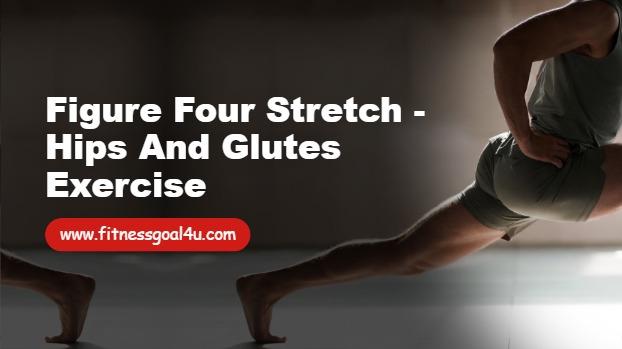
The figure four stretch, also known as the supine piriformis stretch or thread-the-needle pose, is a popular hip-opening exercise performed lying on your back. You cross one ankle over the opposite thigh, creating a shape that resembles the number four.
This stretch primarily targets the piriformis muscle—a deep glute muscle—and the outer hips. It is widely used in yoga, physical therapy, and fitness routines to release tightness in the glutes and hips.
You can do it on the floor with no equipment, or seated for a milder version. It is especially beneficial for runners, desk workers, or anyone with tight hips or sciatica-like symptoms.
The pose gently stretches the hip rotators while keeping the lower back safe when done correctly.
How to Perform the Figure Four Stretch: Step-by-Step Technique
The supine version provides the deepest stretch. Follow these steps carefully:
- Lie flat on your back on a mat, with both knees bent and feet flat on the floor.
- Cross your right ankle over your left thigh, just above the knee—flex your right foot to protect the knee.
- Reach your hands through the space between your legs and clasp them behind your left thigh or around the shin.
- Gently pull your left thigh toward your chest until you feel a stretch in your right glute and outer hip.
- Keep your head and shoulders relaxed on the floor—avoid lifting them.
- Hold the stretch, breathing deeply, then release and switch sides.
To intensify, pull the leg closer. For a gentler option, stay seated and cross one ankle over the opposite knee, leaning forward slightly.
Avoid forcing the stretch—let gravity and breathing do the work.
Why Do the Figure Four Stretch: Key Benefits
This effective stretch offers targeted relief and mobility gains:
- Releases tight piriformis and glutes: Deeply stretches the outer hip muscles.
- Improves hip mobility: Increases external rotation for better movement.
- Eases sciatica symptoms: Often relieves pressure on the sciatic nerve.
- Reduces lower back tension: Loosens hips that contribute to back discomfort.
- Enhances posture: Counteracts tightness from prolonged sitting.
- Safe and accessible: Low-impact, suitable for most people including beginners.
- Promotes relaxation: Deep breathing calms the nervous system.
Regular practice can lead to freer hips, reduced pain, and improved performance in activities like running or squatting.
Recommended Sets and Repetitions
As a static stretch, focus on hold duration and relaxation.
- Beginners: 2-3 holds of 20-30 seconds per side, 1-2 sets.
- Intermediate: 3 holds of 45-60 seconds per side, 2 sets.
- Advanced: 3 holds of 1-2 minutes per side, adding gentle pulses or deeper pulls.
- Daily option: Hold 1-3 minutes per side for maintenance.
Practice 4-7 times per week, ideally after workouts or in the evening. Breathe deeply and relax into the stretch. Progress by increasing hold time gradually.
FAQ (Frequently Asked Questions)
1. Is the figure four stretch suitable for beginners?
Answer: Yes, it is beginner-friendly. Start with short holds and less pull—use the seated version if supine feels too intense.
2. Can figure four stretch help with sciatica?
Answer: Often yes, by stretching the piriformis muscle that can irritate the sciatic nerve. Stop if it worsens symptoms and consult a professional.
3. How often should I do the figure four stretch?
Answer: 4-7 times per week, or daily if hips are tight. It is safe and effective with regular practice.
4. Should I flex my foot in figure four?
Answer: Yes, flexing the crossed foot protects the knee and directs the stretch to the glutes.
5. What if I feel pain in my knee?
Answer: Ease off immediately. Ensure your ankle is above the knee, flex your foot, and reduce the pull. Avoid if knee issues persist.
6. Is figure four good for runners?
Answer: Yes, it helps release tight glutes and hips from running, improving recovery and preventing injuries.