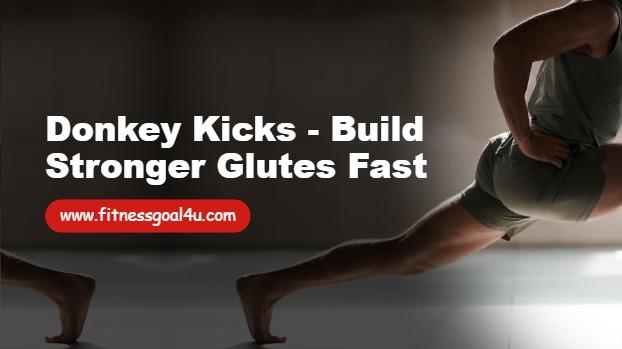
The donkey kick is a popular bodyweight exercise performed on all fours, where you lift one bent leg upward behind you while keeping the knee bent at 90 degrees. It mimics the kicking motion of a donkey, which gives it its fun name.
This move primarily targets the glutes but also engages the hips, core, and hamstrings. It is a staple in glute-focused workouts, Pilates, and home fitness routines because it isolates the butt muscles effectively.
You can do it with no equipment or add a resistance band around your thighs for more intensity. It is low-impact and suitable for most fitness levels, making it great for building a stronger, more toned backside.
Many trainers recommend it for improving hip stability and sculpting the glutes without heavy weights.
How to Perform Donkey Kicks: Step-by-Step Technique
Focus on controlled movement to maximize glute activation. Here's the proper form:
- Start on all fours on a mat, with hands under shoulders and knees under hips.
- Keep your core engaged, back flat, and neck neutral—look down at the mat.
- Bend your right knee at 90 degrees and flex your foot.
- Lift your right leg upward, keeping the knee bent, until your thigh is parallel to the floor or higher.
- Squeeze your glute at the top without arching your lower back.
- Lower your knee back down slowly without touching the floor.
- Complete all reps on one side before switching.
Breathe out as you lift and in as you lower. Avoid swinging or using momentum—keep the movement slow and deliberate.
For beginners, start with smaller lifts. Advanced users can add pulses at the top or a resistance band.
Why Do Donkey Kicks: Key Benefits
This simple exercise delivers targeted results for your lower body:
- Stronger glutes: Primarily builds the gluteus maximus for better shape and power.
- Improved hip stability: Engages the glute medius and minimus for balanced hips.
- Better posture: Strong glutes support the pelvis and reduce lower back strain.
- Toned backside: Helps create a lifted, firmer appearance in the butt.
- Core engagement: Stabilizing on three points activates the abs and lower back.
- Low-impact: Gentle on joints, ideal for rehab or beginners.
- Enhanced athletic performance: Boosts power for running, jumping, and daily movements.
Regular donkey kicks contribute to stronger hips, reduced injury risk, and a more sculpted lower body.
Recommended Sets and Repetitions
Donkey kicks emphasize muscle endurance and control.
- Beginners: 2-3 sets of 10-12 reps per side, body weight only.
- Intermediate: 3 sets of 12-15 reps per side, adding a resistance band.
- Advanced: 3-4 sets of 15-20 reps per side, with pulses or heavier bands.
- Hold variation: Add 2-3 second holds at the top for extra burn.
Include it 3-5 times per week in your glute or lower-body routine. Rest 30-60 seconds between sides. Progress by increasing reps, resistance, or slowing the tempo.
FAQ (Frequently Asked Questions)
1. Are donkey kicks suitable for beginners?
Answer: Yes, they are beginner-friendly. Start with body weight, smaller lifts, and focus on form to avoid back strain.
2. Can donkey kicks help build bigger glutes?
Answer: Yes, they effectively target the glute maximus for growth and toning when done consistently with progressive overload.
3. How often should I do donkey kicks?
Answer: 3-5 times per week is ideal. They pair well with other glute exercises in your routine.
4. Do I need equipment for donkey kicks?
Answer: No, body weight works great. A resistance band adds challenge but is optional.
5. Why does my lower back hurt during donkey kicks?
Answer: Often from arching the back. Engage your core, keep your back flat, and reduce lift height. Stop if pain continues.
6. Are donkey kicks better than squats for glutes?
Answer: They complement each other. Donkey kicks isolate glutes more, while squats build overall lower-body strength.