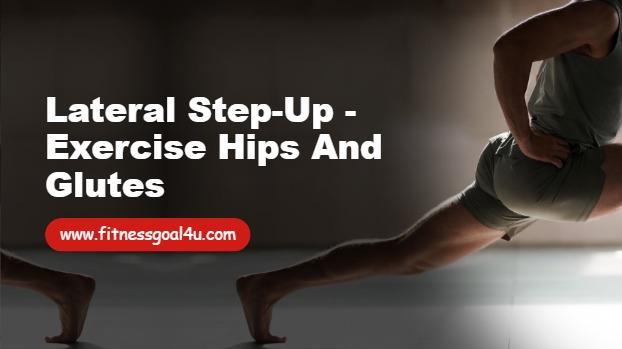
The lateral step-up is a functional lower-body exercise where you step sideways onto a raised platform, such as a bench, box, or step. It mimics real-life movements like climbing stairs sideways or getting out of a car.
Unlike traditional forward step-ups, the lateral version emphasizes the outer hips and glutes more intensely. You can perform it with body weight or by holding dumbbells for added resistance.
This move is common in strength training, physical therapy, and athletic programs because it builds unilateral strength and addresses side-to-side imbalances. It requires only a sturdy elevated surface, making it accessible for home or gym use.
Many people include it to strengthen the hips, improve balance, and enhance performance in sports involving lateral movement.
How to Perform the Lateral Step-Up: Step-by-Step Technique
Proper form prevents knee strain and maximizes hip engagement. Follow these steps:
- Stand sideways next to a sturdy bench or box that reaches about knee height (start lower if you're new to this).
- Place your hands on your hips or hold dumbbells at your sides for balance and added weight.
- Engage your core and keep your chest up and shoulders back.
- Place your near foot (the one closest to the box) firmly on the center of the platform.
- Push through that foot to drive your body upward, bringing your trailing foot up to meet it on the box.
- Stand tall at the top, squeezing your glutes without leaning forward.
- Slowly lower your trailing foot back to the ground in a controlled manner.
- Complete all reps on one side before switching to the other.
Keep your stepping knee tracking over your toes—avoid letting it cave inward. Move deliberately rather than explosively at first. Breathe out on the way up and in on the way down.
Beginners should use a lower step and no weight. Focus on balance and full control.
Why Do the Lateral Step-Up: Key Benefits
This effective exercise delivers targeted improvements for your lower body:
- Stronger glute medius and minimus: Heavily activates the outer hip muscles for better stability.
- Improved hip and knee alignment: Helps prevent inward collapse, reducing pain risk.
- Enhanced balance and coordination: Challenges single-leg control, vital for daily function and sports.
- Injury prevention: Often used to rehab or prevent IT band issues, runner's knee, and ankle sprains.
- Better lateral power: Boosts performance in activities requiring side-to-side movement, like tennis or soccer.
- Toned glutes and thighs: Builds a firmer, more sculpted lower body.
- Functional strength: Translates directly to real-world tasks and improves overall mobility.
Regular practice creates more balanced legs, reduces imbalances, and supports healthier movement patterns.
Recommended Sets and Repetitions
Lateral step-ups build strength and endurance best with moderate reps and focus on quality.
- Beginners: 2 sets of 8-10 reps per side, using a low step and body weight.
- Intermediate: 3 sets of 10-12 reps per side, adding light dumbbells or a higher step.
- Advanced: 3-4 sets of 12-15 reps per side, using heavier weights or slowing the lowering phase.
- Explosive variation: Drive up quickly for power development once form is solid.
Perform 2-4 times per week as part of your lower-body routine or warm-up. Rest 60-90 seconds between sides or sets. Progress by increasing height, weight, reps, or tempo control.
FAQ (Frequently Asked Questions)
1. Is the lateral step-up suitable for beginners?
Answer: Yes, it is great for beginners. Use a low step (like a stair), no weights, and focus on slow, controlled movements to build confidence.
2. Can lateral step-ups help with knee pain?
Answer: Often yes. By strengthening the glute medius, they improve knee tracking and can reduce or prevent common knee issues.
3. How high should the step or box be?
Answer: Start at shin to knee height. As you progress, increase to mid-thigh for more challenge, but only if you maintain good form.
4. Do I need weights for lateral step-ups?
Answer: No, body weight is effective to start. Adding dumbbells or a barbell increases intensity once you master the movement.
5. Why does my knee wobble or cave in?
Answer: This often indicates weak outer hips. Lower the step height, slow down, and consciously push your knee outward. Strength builds quickly.
6. Are lateral step-ups good for runners?
Answer: Absolutely. They strengthen the hips laterally, helping prevent running injuries and improving stability on uneven surfaces.