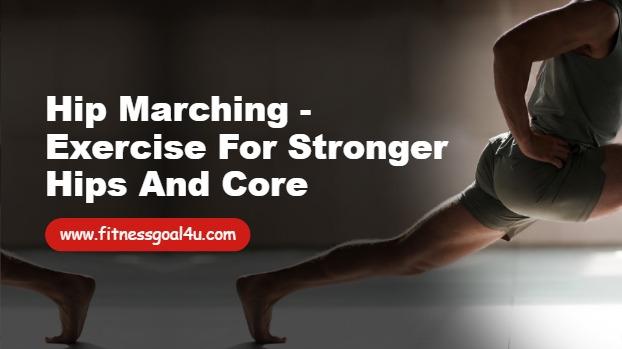
Hip marching is a versatile, low-impact exercise that involves alternately lifting your knees toward your chest in a marching motion. It can be done seated in a chair, standing in place, or as part of a glute bridge for added challenge.
The seated version is especially popular for seniors, office workers, or anyone with limited mobility. Standing hip marching serves as a great warm-up, while the bridge variation (often called glute bridge march) targets the posterior chain more intensely.
This exercise requires no equipment and can be performed anywhere. It strengthens the hip flexors, activates the core, and improves coordination without stressing the joints.
Many physical therapists and trainers recommend it for building hip strength, enhancing stability, and counteracting the effects of prolonged sitting.
How to Perform Hip Marching: Step-by-Step Technique
The basic seated version is ideal for most people. Here's how to do it correctly:
- Sit upright in a sturdy chair with your feet flat on the floor, hip-width apart.
- Place your hands on your thighs or the sides of the chair for support.
- Engage your core by drawing your belly button toward your spine.
- Lift your right knee toward your chest as high as comfortable, keeping your foot flexed.
- Hold for a moment, then lower your right foot back to the floor in a controlled way.
- Repeat with your left knee, alternating sides in a smooth marching rhythm.
- Keep your back straight and avoid leaning forward or backward.
Breathe steadily—exhale as you lift and inhale as you lower. Move slowly to feel the muscles working.
For standing: Stand tall and march in place, driving knees higher. For bridge marching: Start in a glute bridge and alternate lifting knees while keeping hips elevated.
Why Do Hip Marching: Key Benefits
This simple movement provides impressive advantages for your hips and overall fitness:
- Stronger hip flexors: Directly targets these muscles, improving lifting power and stride length.
- Enhanced core stability: Requires engagement to maintain posture and balance.
- Better hip mobility: Increases range of motion and reduces stiffness from sitting.
- Improved balance and coordination: Alternating legs challenges stability, especially in bridge variations.
- Low-impact and joint-friendly: Safe for seniors, rehab, or anyone avoiding high stress on knees or back.
- Glute and hamstring activation: Bridge marching adds posterior chain strength for better posture.
- Injury prevention: Strengthens supporting muscles to reduce risk of falls or lower body strains.
Regular practice leads to easier daily movements, reduced discomfort, and a more active lifestyle.
Recommended Sets and Repetitions
Hip marching works well as a mobility or activation drill with moderate volume.
- Beginners: 2 sets of 10 lifts per leg (20 total marches), seated version.
- Intermediate: 3 sets of 12-15 lifts per leg, adding standing or light resistance band.
- Advanced: 3-4 sets of 15-20 lifts per leg, using bridge variation or holding at the top.
- Time-based option: March continuously for 30-60 seconds per set.
Perform 3-6 times per week, as a warm-up, during breaks, or in a core routine. Rest 30-60 seconds between sets. Progress by increasing height, speed, or adding variations.
FAQ (Frequently Asked Questions)
1, Is hip marching suitable for seniors?
Answer: Yes, the seated version is excellent for seniors. It is low-impact, improves mobility, and can be done safely in a chair.
2. Can hip marching help with tight hip flexors?
Answer: Yes, it strengthens hip flexors while improving their flexibility and range of motion through controlled movement.
3. How often should I do hip marching?
Answer: 3-6 times per week is ideal. It is gentle enough for daily use as a mobility or activation exercise.
4. Does hip marching strengthen the core?
Answer: Absolutely. Maintaining posture and controlling the lifts engages the core muscles significantly.
5. What if I feel lower back strain?
Answer: Reduce the lift height, engage your core more, and sit taller. Stop if pain persists and consult a professional.
6. Is the glute bridge march variation harder?
Answer: Yes, it adds glute and hamstring work while challenging stability—great for advanced users.