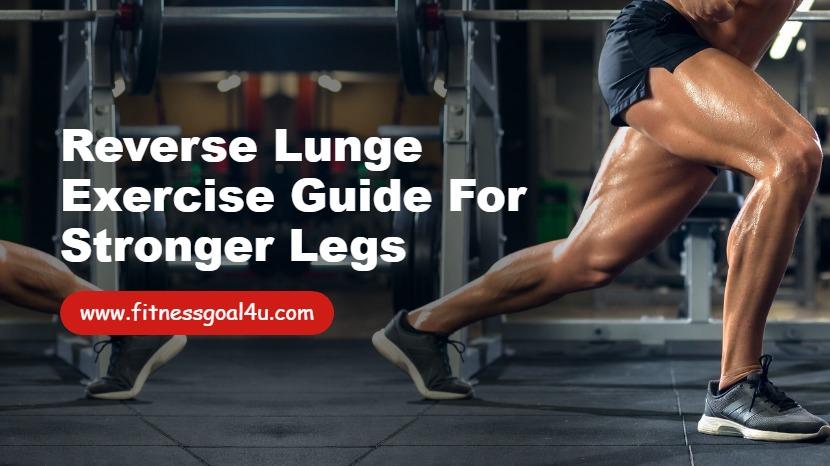
The Reverse Lunge is a highly effective lower-body exercise where you step backward into a lunge position instead of forward. This movement places less stress on the knees while targeting major leg muscles, making it ideal for beginners and advanced athletes alike.
This exercise improves leg strength, balance, and functional mobility, and can be performed using bodyweight or added resistance such as dumbbells or barbells.
How to Perform Reverse Lunge (Step-by-Step Technique)
Follow these steps to perform the Reverse Lunge with proper form and maximum effectiveness.
1. Starting Position
Stand upright with your feet hip-width apart, chest lifted, and core engaged. Keep your hands at your sides or on your hips.
2. Execution
- Step one foot straight backward while keeping your front foot planted.
- Lower your hips until both knees bend to approximately 90 degrees.
- Ensure your front knee stays aligned with your toes and does not collapse inward.
- Keep your torso upright and core tight throughout the movement.
3. Return to Start
Push through the heel of your front foot to return to the starting position. Repeat on the opposite leg.
Why Perform Reverse Lunges? (Benefits)
The Reverse Lunge offers multiple fitness benefits that support strength, stability, and injury prevention.
- Reduces knee stress compared to forward lunges
- Strengthens quadriceps, hamstrings, and glutes
- Improves balance and coordination
- Enhances unilateral leg strength to correct muscle imbalances
- Boosts functional movement for daily activities and sports
Recommended Sets & Repetitions
Choose your sets and reps based on your fitness level and training goals.
- Beginners: 2–3 sets of 8–10 reps per leg
- Intermediate: 3–4 sets of 10–12 reps per leg
- Advanced: 4 sets of 12–15 reps per leg with added resistance
FAQ ( Frequently Asked Questions)
1. Is the reverse lunge better than the forward lunge?
Answer: Yes, the reverse lunge places less stress on the knees while offering similar muscle activation, making it safer for many individuals.
2. Which muscles do reverse lunges work?
Answer: Reverse lunges primarily target the quadriceps, glutes, hamstrings, and also engage the core for stability.
3. Can beginners do reverse lunges?
Answer: Absolutely. Reverse lunges are beginner-friendly and easier to balance than forward lunges.
4. Should reverse lunges be done with weights?
Answer: Bodyweight reverse lunges are effective, but adding weights can increase strength gains once proper form is mastered.
5. How often should I do reverse lunges?
Answer: Reverse lunges can be performed 2–3 times per week as part of a balanced leg workout routine.